
Octans Insurance
Indexed Universal Life Insurance: Permanent Coverage With Index-Linked Interest Potential
Indexed universal life insurance, commonly called IUL, is permanent life insurance that combines a death benefit with cash value. Interest credited to certain policy accounts can be linked to the performance of a market index, subject to the policy’s caps, participation rates, floors, charges, and other provisions.
- Permanent life insurance protection when adequately funded and maintained
- Cash value with index-linked interest-crediting options
- Premium and death-benefit flexibility may be available
- Policy performance depends on funding, charges, credited interest, and contract terms
- Indexed universal life (IUL) is permanent coverage whose cash value earns interest linked to a market index, subject to a cap and a floor.
- Caps, participation rates, and policy charges can change, so illustrated returns are not guaranteed.
- IUL can work for long-term, well-funded strategies but can lapse if underfunded.
- Compare IUL with whole life and term-plus-investing before you buy.
Table of Contents

What Is Indexed Universal Life Insurance?
Indexed universal life insurance is a form of permanent life insurance. Like other universal life policies, it can provide a death benefit and accumulate cash value. What distinguishes an IUL policy is that some interest-crediting options are linked to the performance of one or more external market indexes.
The policy does not mean that your cash value is directly invested in the stock market or that you own shares of an index. Instead, the insurance company uses a formula described in the contract to determine the interest, if any, credited to the applicable account.
How Does Indexed Universal Life Insurance Work?
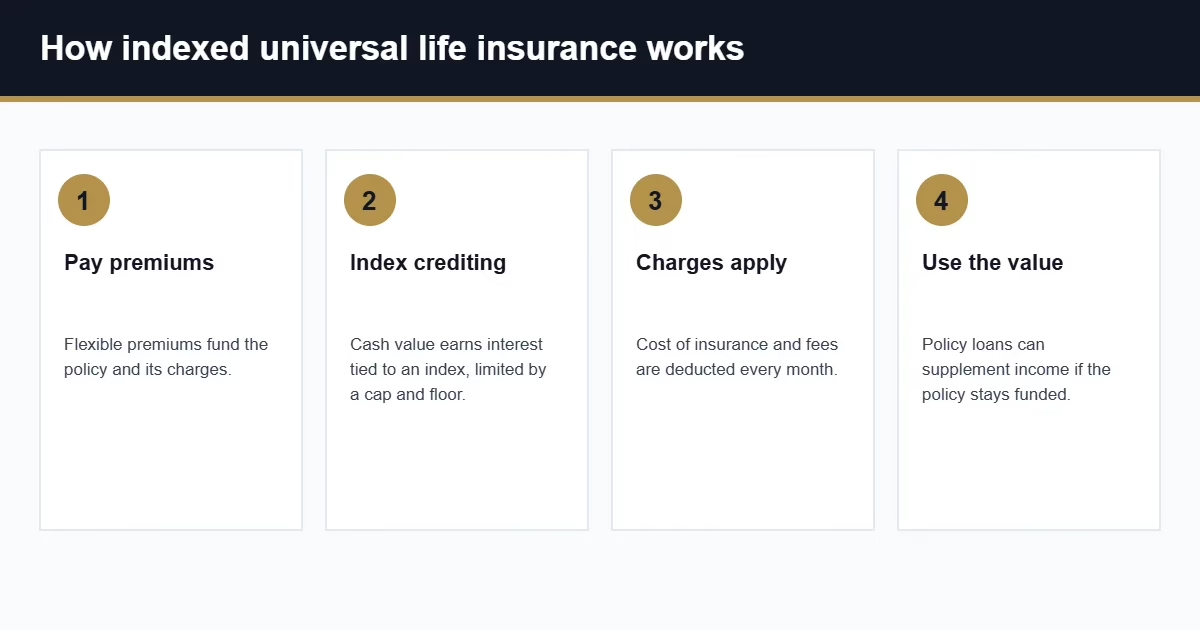
- Premiums are paid into the policy. Premium payments are subject to policy charges and expenses.
- Policy charges are deducted. These may include cost-of-insurance charges, administrative expenses, rider charges, and other contractual deductions.
- Remaining policy value can earn interest. Depending on the policy, values may be allocated among index-linked and fixed-interest options.
- Index-linked interest is calculated. Caps, participation rates, spreads, floors, and other provisions can affect credited interest.
- The policy must remain adequately funded. Insufficient value or premium funding can cause a policy to lapse unless applicable guarantees prevent it.
IUL vs. Whole Life vs. Term Life Insurance
| Feature | Indexed Universal Life | Whole Life | Term Life |
|---|---|---|---|
| Coverage | Permanent when sufficiently funded and maintained | Permanent when required premiums are paid | Specified term |
| Cash value | Yes, with available interest-crediting options | Yes, according to policy guarantees | Generally none |
| Premium flexibility | May offer flexibility within policy limits | Typically scheduled and level | Typically scheduled during the term |
| Interest or growth | May be linked to index performance under a contractual formula | Cash value follows policy guarantees; dividends may apply on participating policies | Not applicable |
How Index-Linked Interest Crediting Works
An IUL policy may reference an external index, but the policyholder is not directly investing in that index. The insurer calculates credited interest according to the policy’s crediting method. A cap can limit the amount of index gain considered, while a participation rate can determine what percentage of an index change is used in the calculation. Some strategies may use spreads or other adjustments.
A floor may protect an index-linked account from being credited a negative interest rate solely because the referenced index declined during a crediting period. However, a zero-percent floor does not mean the overall policy value cannot decrease. Policy charges and other deductions can reduce cash value even when no negative index interest is credited.
Premium Flexibility and Policy Funding
Universal life policies may allow flexibility in the timing or amount of premiums within contractual limits. That flexibility does not mean premiums are optional without consequences. The policy needs sufficient value to cover ongoing charges.
Actual results can differ from an illustration. Interest crediting, charges, withdrawals, loans, premium timing, changes in insurance costs where permitted, and other factors can affect how long coverage remains in force. Policyowners should review in-force illustrations periodically and monitor policy performance.
Accessing IUL Cash Value
Depending on the contract, policyowners may be able to access available cash value through withdrawals or policy loans. Loans generally accrue interest, and loans and withdrawals reduce policy values and can reduce the death benefit.
Taking too much value from a policy can increase lapse risk. A lapse or surrender with an outstanding loan may also have tax consequences. Tax treatment depends on individual circumstances and policy status, so tax questions should be discussed with an appropriate tax professional.
Living Benefits and IUL
Some indexed universal life policies offer accelerated death benefit or other riders that may allow access to a portion of the death benefit following qualifying events defined by the policy. Depending on the carrier and rider, qualifying events may involve certain terminal, chronic, or critical illnesses.
Riders differ significantly. Availability, definitions, eligibility, charges, benefit amounts, state availability, and the effect on the remaining death benefit depend on the contract. Living benefits are not a substitute for health, disability, or long-term care insurance unless the policy specifically provides that coverage.
Who May Consider Indexed Universal Life Insurance?
IUL may be considered by people seeking permanent life insurance who also want cash-value accumulation potential tied to an index-crediting strategy. Because these policies contain moving parts—including charges, crediting terms, funding assumptions, and possible loans—they require more ongoing attention than simpler forms of life insurance.
The suitability of any life insurance policy depends on the purpose of the coverage, financial circumstances, budget, risk tolerance, time horizon, health, and available alternatives. Life insurance should be evaluated primarily for its insurance purpose rather than solely as an accumulation strategy.
Common Indexed Universal Life Insurance Mistakes
Thinking an IUL Is a Direct Stock Market Investment
An IUL does not directly invest your policy value in a market index. Interest is determined under the insurer’s contractual crediting formula.
Assuming a 0% Floor Means Cash Value Cannot Decline
Policy charges can reduce cash value even when the index-linked strategy receives no negative index credit.
Relying Only on Illustrated Values
Non-guaranteed illustrated values are hypothetical. Actual policy results can be higher or lower depending on future crediting, charges, funding, loans, withdrawals, and other factors.
Underfunding the Policy
Flexible premiums do not eliminate the need to maintain sufficient policy value. Underfunding can increase the risk of lapse.
COMPARE LIFE INSURANCE OPTIONS

What Are the Downsides of Indexed Universal Life?
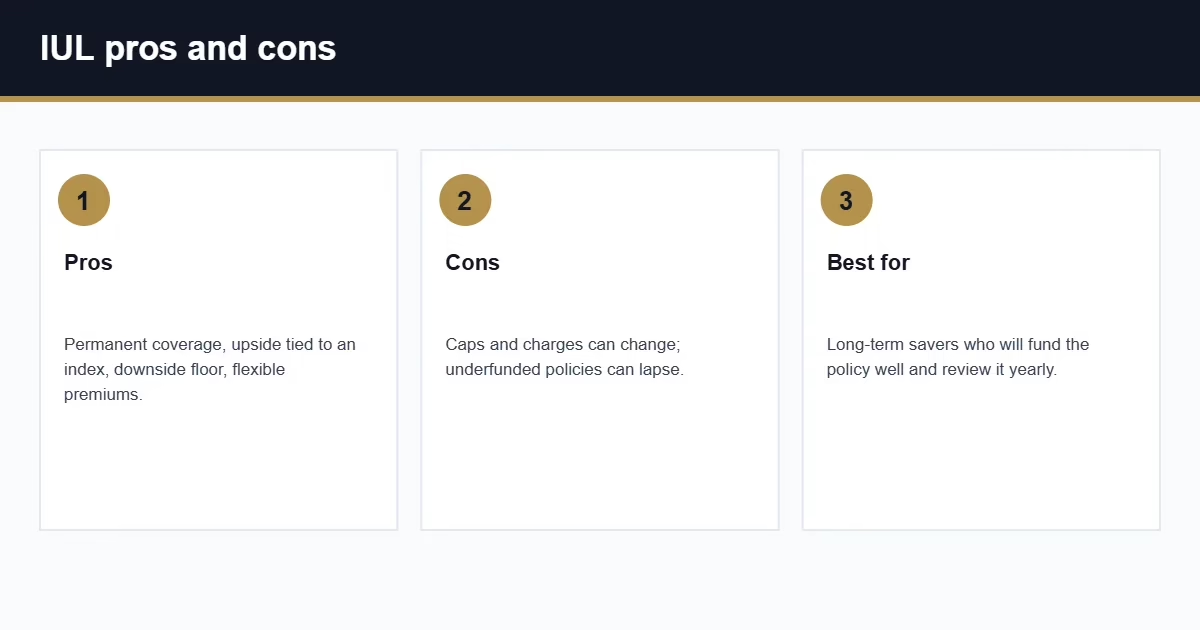
Indexed universal life insurance (IUL) can be a useful tool, but it’s complex. Many of the complaints about it come from policies that were sold with rosy projections. Know these drawbacks before you buy:
- Rising cost of insurance. Each month the policy deducts a charge for the death benefit. That charge rises as you age. If the cash value doesn’t grow enough to cover it, you’ll need to pay more or the policy can lapse.
- Caps and participation rates can change. The insurer can usually lower the cap or participation rate after you buy, within the limits in the contract. Lower caps mean lower credited interest.
- You don’t get the full market return. Index credits usually exclude dividends and are limited by the cap. A 0% floor protects you in down years, but your policy charges still come out.
- Surrender charges. Most IUL policies charge a fee if you cancel or withdraw heavily in roughly the first 10 to 15 years.
- Illustrations aren’t promises. The projection you’re shown uses an assumed rate. Real results will differ, sometimes a lot.
Is an IUL a Good Investment?
An IUL is life insurance first, not an investment. It can make sense for people who need permanent coverage and want tax-advantaged cash value with downside protection. It’s a poor fit if your main goal is growing wealth at the lowest cost. In that case, most people do better by first taking any employer 401(k) match, then funding a Roth IRA and the rest of their 401(k).
| IUL | 401(k) / IRA | Term + invest the difference | |
|---|---|---|---|
| Main purpose | Permanent death benefit plus cash value | Retirement savings | Low-cost protection plus market investing |
| Downside protection | 0% floor on index credits (charges still apply) | None; full market risk | None on investments |
| Upside | Limited by cap and participation rate | Full market return minus fund fees | Full market return |
| Access before retirement | Policy loans and withdrawals, often tax-free if structured correctly | Penalties before 59½ (some exceptions) | Taxable account, no penalty |
| Costs | Insurance charges, fees, surrender charges | Fund and plan fees | Term premium plus fund fees |
Some well-known personal finance commentators, including Dave Ramsey, recommend buying term insurance and investing the difference instead of buying cash value policies. That advice fits many families. An IUL is generally worth a look only after you’ve covered your basic protection and retirement savings, and when you value the permanent death benefit and the tax treatment.
How Much Money Do You Need to Start an IUL?
There’s no single minimum. The required premium depends on your age, health and death benefit. A small policy may need only $100 to $200 a month to stay in force. But an IUL meant to build meaningful cash value needs much more, often several hundred dollars a month or more. It should be funded close to the maximum the tax rules allow without becoming a modified endowment contract (MEC).
The more important question is how long you can keep paying. IUL works best when you can fund it steadily for at least 10 to 15 years. If money is tight or your income is uncertain, a term policy is usually the safer choice.
How to Read an IUL Illustration
Before buying an indexed universal life insurance policy, ask for the illustration and look at three columns or pages:
- Guaranteed values. This shows what happens if the policy earns only its minimum and the insurer charges its maximum. If the policy lapses early on the guaranteed page, understand why.
- The illustrated rate. Industry rules (the NAIC’s Actuarial Guideline 49-A and 49-B) limit how high the assumed rate can be. Ask what happens at 1% or 2% lower.
- Loan assumptions. Many illustrations show big tax-free “income” from policy loans in retirement. Check the loan interest rate assumed and whether the policy stays in force after the loans.
Review your policy’s annual statement every year. If credited rates have been lower than illustrated, adjusting premiums early can prevent a lapse later.
Who Should Avoid Indexed Universal Life?
- Anyone who mainly needs income protection for 10 to 30 years
- People who aren’t yet maxing out tax-advantaged retirement accounts
- Anyone who may need to stop or reduce payments in the next decade
- Buyers who don’t want to review the policy each year
Questions to Ask Before Buying Indexed Universal Life Insurance
- What are the current cap and participation rates, and what are the contract minimums they can drop to?
- What is the total of all policy charges in years 1, 10 and 20?
- How long do surrender charges last, and how much are they each year?
- What premium keeps the policy in force to age 100 or later on guaranteed assumptions?
- Is there a no-lapse guarantee rider, and what does it require?
- What loan options does the policy offer (fixed, variable or indexed), and what are the risks of each?
- Which living benefits riders are included for chronic, critical or terminal illness?
A good agent will answer each of these in writing. At Octans, we compare indexed universal life policies from several carriers and show the guaranteed page, not just the best-case projection.
If an IUL isn’t the right fit, we’ll say so and show you the term, whole life or guaranteed universal life options that fit your goals better.
Already own an IUL? We can also review your in-force illustration and tell you whether your current funding keeps the policy on track.
Indexed Universal Life Insurance FAQs
What does IUL stand for?
IUL stands for indexed universal life insurance, a form of permanent life insurance with cash value and index-linked interest-crediting options.
Is IUL invested directly in the stock market?
No. An IUL may reference a market index for purposes of calculating credited interest, but policy value is not directly invested in the index.
Can an IUL lose cash value?
Yes. Even when an index-linked strategy has a floor that prevents negative index interest, policy charges, withdrawals, loans, and other deductions can reduce cash value.
Are IUL returns guaranteed?
No. Non-guaranteed credited interest and illustrated values can vary. The policy contract identifies applicable guarantees and the provisions governing interest crediting.
Can I borrow from an IUL policy?
Many policies allow loans when sufficient value is available. Loans generally accrue interest and can reduce policy values and the death benefit and increase lapse risk.
Does IUL provide living benefits?
Some policies offer accelerated death benefit or other riders for qualifying events. Availability and terms vary by carrier, policy, state, and eligibility.
How is IUL different from whole life insurance?
Whole life generally emphasizes scheduled premiums and contractual cash-value guarantees. IUL generally offers more flexibility and index-linked crediting options, along with different risks and policy-management requirements.
How should I compare IUL policies?
Review the death benefit, premium assumptions, guaranteed and non-guaranteed values, policy charges, index-crediting methods, caps, participation rates, floors, riders, loan provisions, surrender charges, and lapse risk.
Compare Indexed Universal Life Insurance with Octans Insurance
Octans Insurance is an independent insurance agency. We help consumers review available life insurance options from multiple carriers and understand differences in death benefits, cash value, policy funding, interest-crediting methods, riders, underwriting, and policy charges.
Use our Easy Quote Tool, learn more about Octans Insurance, review Whole Life Insurance, or explore Term Life Insurance.
Related Coverage and Guides
Sources: NAIC Life Insurance Buyer’s Guide.
Important: Indexed universal life insurance is life insurance, not a direct investment in a market index. Index-crediting features, caps, participation rates, floors, spreads, charges, guarantees, riders, loan provisions, surrender charges, and availability vary by carrier and state. Non-guaranteed illustrated values are hypothetical and actual results may differ. Policy loans and withdrawals reduce policy values and death benefits and may increase lapse risk. A lapse or surrender can have tax consequences. Octans Insurance agents are licensed in the states in which they operate.
Ready to Compare Indexed Universal Life Insurance?
Review available life insurance options based on your protection goals, budget, health, and eligibility.
GET YOUR FREE LIFE INSURANCE QUOTE
(617) 935-9220 | life@octansinsurance.com