
Octans Insurance
Term Life Insurance: Flexible Protection for the Years Your Family May Need It Most
Term life insurance provides life insurance protection for a selected period of time. It can help families protect income, mortgages, education plans, debts, and other financial responsibilities while keeping coverage straightforward.
- Choose a coverage amount and term that fits your needs
- Compare options from multiple life insurance carriers
- No-medical-exam options may be available for qualifying applicants
- Free, no-obligation quote review with a licensed agent
- Term life insurance covers a set period, commonly 10, 20, or 30 years, and pays a death benefit if you die during the term.
- It is usually the lowest-cost way to buy a large amount of coverage while income and a mortgage need protecting.
- A healthy 40-year-old can find $500,000 of 20-year term coverage for roughly $47–$59 a month in published samples.
- Many term policies can be converted to permanent coverage without new medical questions before a deadline.
Table of Contents


What Is Term Life Insurance?
Term life insurance is coverage designed to remain in force for a specified term, provided required premiums are paid and the policy remains active. Common term periods include 10, 15, 20, and 30 years, although available term lengths vary by carrier, product, age, and state.
If the insured person dies while an eligible policy is in force, the insurer pays the policy’s death benefit to the named beneficiary according to the terms of the contract. Unlike many permanent life insurance policies, term life insurance generally does not build cash value.
Because term coverage is designed for a defined period, it is often considered by people who want protection during years when their financial obligations are greatest.
How Does Term Life Insurance Work?
- Select a coverage amount. Consider income replacement, mortgage obligations, debts, education expenses, and other needs.
- Select a term. Choose a period intended to cover the years when those financial responsibilities are expected to remain.
- Apply for coverage. The carrier evaluates the application under its underwriting guidelines. Some applicants may qualify for accelerated or no-exam underwriting.
- Keep the policy in force. Required premiums must be paid according to the policy terms.
- Review coverage as life changes. Marriage, children, a new home, income changes, or new debts can affect the amount of protection a household may need.
Term Life vs. Whole Life vs. Universal Life
| Feature | Term Life | Whole Life | Universal Life |
|---|---|---|---|
| Coverage period | Specified term | Permanent when policy requirements are met | Potentially permanent, subject to policy funding and terms |
| Cash value | Generally none | Typically included | May accumulate depending on policy type and performance |
| Typical use | Temporary financial obligations | Long-term protection and guarantees | Flexible permanent coverage |
What Can Term Life Insurance Help Protect?
A term policy can be used to help protect against the financial impact of losing a household member during a period of major financial responsibility. Common considerations include replacing income, paying a mortgage, providing funds for children, paying outstanding debts, supporting education goals, and helping a surviving family maintain financial stability.
How Much Term Life Insurance Should You Consider?
There is no single coverage amount that fits every household. A useful review starts with the financial obligations that would remain if an income earner died. Consider current income, years of income replacement desired, mortgage and other debts, childcare, education goals, existing savings, employer-provided life insurance, and other life insurance already in force.
Common Mistakes to Avoid
Waiting Until Later
Age and health can affect eligibility and premiums. Waiting can change the options available when you eventually apply.
Relying Only on Employer Coverage
Employer-sponsored life insurance can be valuable, but coverage may be limited or may not remain with you after a job change. Review the actual benefit and portability provisions.
Choosing Coverage Based Only on Price
Premium is important, but term length, conversion options, underwriting, riders, carrier requirements, and policy provisions can also matter.
Forgetting to Review Beneficiaries
Beneficiary designations should be reviewed after major life events and kept consistent with your current intentions.
Term Life Insurance Rates by Age: Sample Monthly Premiums
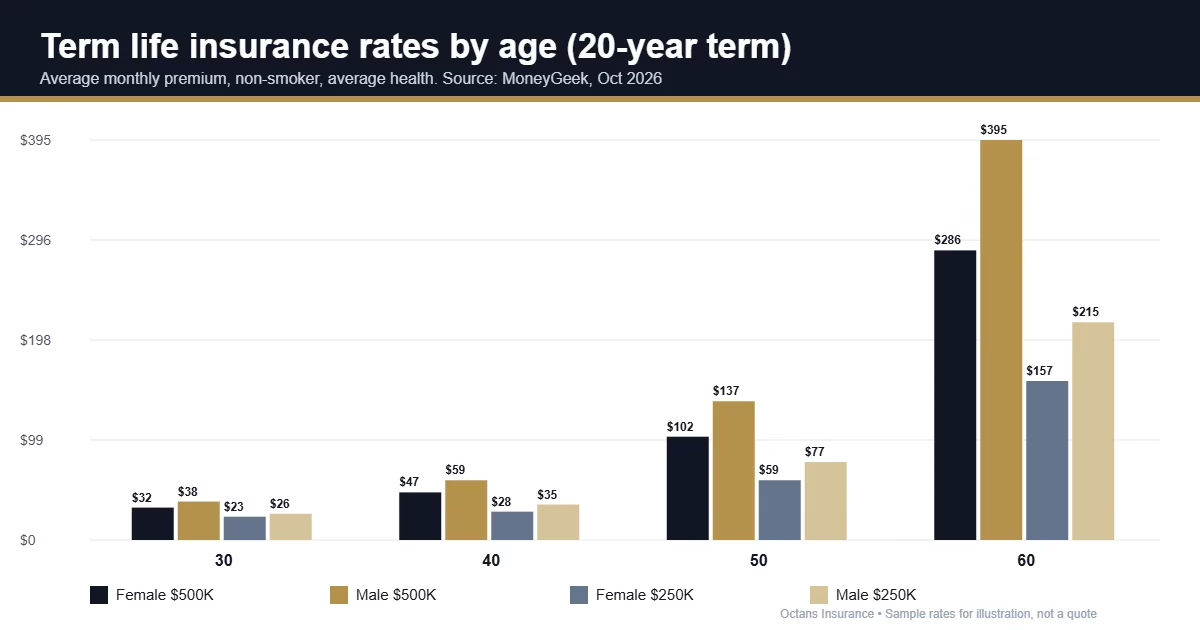
These sample term life insurance rates show average monthly premiums for a 20-year level term policy for a non-smoker in average health. They are published by MoneyGeek (updated October 11, 2026) and are not a quote.
| Age | Female $250K | Female $500K | Male $250K | Male $500K |
|---|---|---|---|---|
| 30 | $23 | $32 | $26 | $38 |
| 40 | $28 | $47 | $35 | $59 |
| 50 | $59 | $102 | $77 | $137 |
| 60 | $157 | $286 | $215 | $395 |
Sample rates published by MoneyGeek as of October 11, 2026. Shown for illustration only; not a quote or offer of coverage. Your premium depends on age, sex, health, tobacco use, state, carrier, and underwriting.

How Your Health Class Changes Term Life Insurance Rates
Two people the same age can pay very different prices for the same term policy. The difference is the health class the insurer assigns after reviewing your application, prescriptions and medical records. The best classes are usually called Preferred Plus (or Super Preferred), then Preferred, then Standard Plus and Standard. Tobacco users have their own classes.
Here’s what that looks like for a $500,000, 20-year term policy for non-smokers. These are yearly premiums (NerdWallet, data valid October 1, 2026; samples, not a quote):
| Age / sex | Preferred Plus | Preferred | Standard |
|---|---|---|---|
| Woman, 30 | $182 | $211 | $328 |
| Woman, 40 | $278 | $336 | $491 |
| Woman, 50 | $636 | $749 | $1,129 |
| Man, 30 | $213 | $271 | $396 |
| Man, 40 | $321 | $405 | $631 |
| Man, 50 | $810 | $966 | $1,481 |
At age 50, a man in the Standard class pays about 80% more than one in Preferred Plus. Blood pressure, cholesterol, weight, family history, driving record and even some hobbies all affect your class. Each carrier draws the lines differently, which is why comparing several companies can move you up a class.
How Much Does a $1,000,000 Term Life Insurance Policy Cost?
A $1 million term policy usually costs a bit less than twice the price of a $500,000 policy. That’s because insurers give volume (“band”) discounts at higher face amounts. Using the table above as a guide, a 40-year-old non-smoker might expect roughly $45 to $95 a month for $1,000,000 of 20-year coverage, depending mostly on health class. Most buyers who need $1 million are replacing a high income or covering a large mortgage plus college costs.
Can You Buy a $100,000 Term Life Policy?
Yes, but it’s often poor value. Many carriers price $100,000 and $250,000 policies almost the same, because the fixed costs of issuing a policy don’t shrink with the face amount. Some carriers set their lowest term amount at $100,000 or more. If $100,000 is all you need, for example to cover a small mortgage balance, ask for quotes at both $100,000 and $250,000. You may find the larger amount costs only a few dollars more a month. If you only need money for final expenses, a small final expense policy may fit better.
How to Choose a Term Length: 10, 15, 20 or 30 Years
| Term | Often a good fit when… |
|---|---|
| 10 years | You’re 55 or older, or need coverage until a specific debt or retirement date that’s close |
| 15 years | Your youngest child is in middle school, or you have 15 years left on a mortgage |
| 20 years | You have young children and want coverage until they finish college |
| 30 years | You just bought a home with a 30-year mortgage or just had your first child |
A simple rule: choose the term that lasts until your youngest child is independent and your biggest debts are paid off. Some people “ladder” policies, for example a 30-year policy for the mortgage plus a 20-year policy for the child-raising years, so coverage drops as their needs drop.
Useful Term Life Insurance Riders
Riders are optional add-ons. Some are included at no cost, others add a small charge. The most useful on a term policy:
- Conversion option. Lets you switch to permanent coverage later without a medical exam. Check the deadline; it’s often before a certain age or policy year.
- Accelerated death benefit. Pays part of the benefit early if you’re diagnosed with a terminal, and sometimes chronic or critical, illness. See life insurance with living benefits.
- Waiver of premium. Keeps the policy in force without payments if you become disabled.
- Child term rider. Adds a small amount of coverage for all your children under one rider.
- Return of premium. Refunds your premiums if you outlive the term, but raises the price a lot. See return of premium term life insurance.
How to Apply for Term Life Insurance
- Get quotes from several carriers for the amount and term you need.
- Complete the application by phone or online. Expect questions about your health, medications, family history, driving record, travel and finances.
- Underwriting. Many applicants qualify with no exam through accelerated underwriting. Others need a short paramedical exam at home, with blood, urine and blood pressure.
- Approval and offer. Decisions can take minutes to a few weeks. Review the health class you’re offered. It can differ from the quote.
- Sign and pay the first premium to put the policy in force. Store the policy with your important papers and tell your beneficiary.
How to Find the Best Term Life Insurance for You
“Best” is personal. The best term life insurance company for a healthy 35-year-old runner is often different from the best one for a 50-year-old with type 2 diabetes. When comparing, look past the monthly price:
- Underwriting for your health: which carrier gives your conditions the best health class
- Conversion rights: how long you can convert, and to which permanent policies
- Included riders: some carriers include a terminal or chronic illness benefit at no cost
- Financial strength: an A.M. Best rating of A or better
- No-exam options: whether you can skip the exam at your age and amount (see no exam life insurance)
An independent agency like Octans can compare these across many carriers at once, instead of showing one company’s price.
What Happens When Your Term Ends?
When the level term period ends, you usually have four choices: let the policy end, keep it at a much higher yearly renewable price, convert it to permanent coverage without a new exam (if the conversion window is still open), or buy a new policy based on your current age and health. Most people let it end because the kids are grown and the mortgage is paid. If you still need coverage, start shopping a year or two before the term ends. Read the full guide: what happens when term life insurance ends.
Term Life Through Work vs. Your Own Policy
Many people already have group term life through an employer, often one or two times their salary. It’s a helpful start, but it has limits. The amount is usually too small for a family with a mortgage. The coverage typically ends when you leave the job. And the price for extra “supplemental” coverage often rises every five years as you age. An individual 20- or 30-year term policy locks in your price while you’re younger and healthier, and it stays with you if you change jobs. Many families keep both: the free work coverage plus their own level term policy for the bulk of their need.
Term Life Insurance FAQs
How long does term life insurance last?
Term life insurance lasts for the term specified in the policy. Common choices include 10, 15, 20, and 30 years, with availability varying by carrier and applicant.
Does term life insurance have cash value?
Term life insurance generally does not accumulate cash value. Its primary purpose is to provide a death benefit during the policy term.
Can I get term life insurance without a medical exam?
Some carriers offer accelerated or no-medical-exam underwriting for qualifying applicants. Eligibility, coverage limits, and pricing vary by carrier.
What happens when a term life policy expires?
Options depend on the policy. Coverage may end, renewal may be available at a higher premium, or the policy may include a conversion option. Review the specific contract before the term ends.
Can term life insurance help protect a mortgage?
Yes. A term policy can be structured so that the coverage period and death benefit help address a mortgage obligation, although the beneficiary generally controls how policy proceeds are used.
Can I convert term life insurance to permanent coverage?
Some term policies include a conversion privilege that allows conversion to an eligible permanent policy during a specified period. Rules vary by carrier and contract.
How are term life insurance rates determined?
Carriers may consider factors such as age, health history, tobacco or nicotine use, coverage amount, term length, occupation, lifestyle, and other underwriting information.
When should I review my life insurance?
Consider reviewing coverage after major life events such as marriage, divorce, the birth or adoption of a child, buying a home, changing jobs, taking on significant debt, or experiencing a major income change.
Compare Term Life Insurance Options with Octans Insurance
Octans Insurance is an independent insurance agency. We help consumers review life insurance options from multiple carriers and understand differences in underwriting, term lengths, policy features, and available riders. The appropriate policy depends on your needs, budget, eligibility, and the carrier’s underwriting requirements.
Learn more about Octans Insurance or use our Easy Quote Tool.
Related Coverage and Guides
- How life insurance secures your loved ones’ future
- What happens when term life insurance ends
- How much life insurance do I need?
- Whole life insurance
- Mortgage protection insurance
- Life insurance quotes
- Life insurance by state
Sources: MoneyGeek, Term Life Insurance Rates by Age (updated Oct 11, 2026); NAIC Life Insurance Buyer’s Guide.
Important: Octans Insurance agents are licensed in the states in which they operate. Coverage availability and rates may vary by state. Premium estimates, when provided, are for illustrative purposes only. Final rates are determined by the insurance carrier based on underwriting and applicable policy criteria. Policy terms, exclusions, limitations, riders, and availability vary by carrier and state.
Ready to Compare Term Life Insurance?
Start with a free quote review and compare available coverage based on your needs and eligibility.
GET YOUR FREE LIFE INSURANCE QUOTE
(617) 935-9220 | life@octansinsurance.com