
Term Life Insurance
Return of Premium Term Life Insurance: Costs, Pros and Cons
Return of premium term life insurance refunds your base premiums if you outlive the policy. Here is what it costs, how the refund works, and how to tell whether it beats regular term plus saving the difference.
- Return of premium (ROP) term refunds your base premiums, without interest, if you outlive the term.
- It usually costs 2 to 3 times as much as regular term, and up to 5 times in some cases.
- Canceling early usually forfeits most or all of the refund.
- In a published example, investing the price difference beats ROP if you earn more than about 2% a year after taxes.
Table of Contents
Return of premium term life insurance is term life coverage that refunds the base premiums you paid if you outlive the policy. You get the same death benefit protection as regular term life insurance, plus your money back at the end, but you pay a lot more each month for that promise. This guide explains how return of premium term life insurance works, what it costs, and how to tell whether it beats buying regular term and saving the difference.
What Is Return of Premium Term Life Insurance?
Regular term life insurance covers you for a set number of years, such as 20 or 30. If you die during the term, your beneficiaries receive the death benefit. If you outlive the term, coverage ends and you get nothing back. Return of premium (ROP) term life insurance changes that last part. If you’re still alive when the term ends and you’ve paid every premium, the insurer refunds the premiums you paid.
The refund is usually limited to the base premium. Policy fees, extra riders and any rating charges may not be refunded, so ask exactly what’s included. The refund also doesn’t earn interest. You get back the same dollars you paid in, years later.
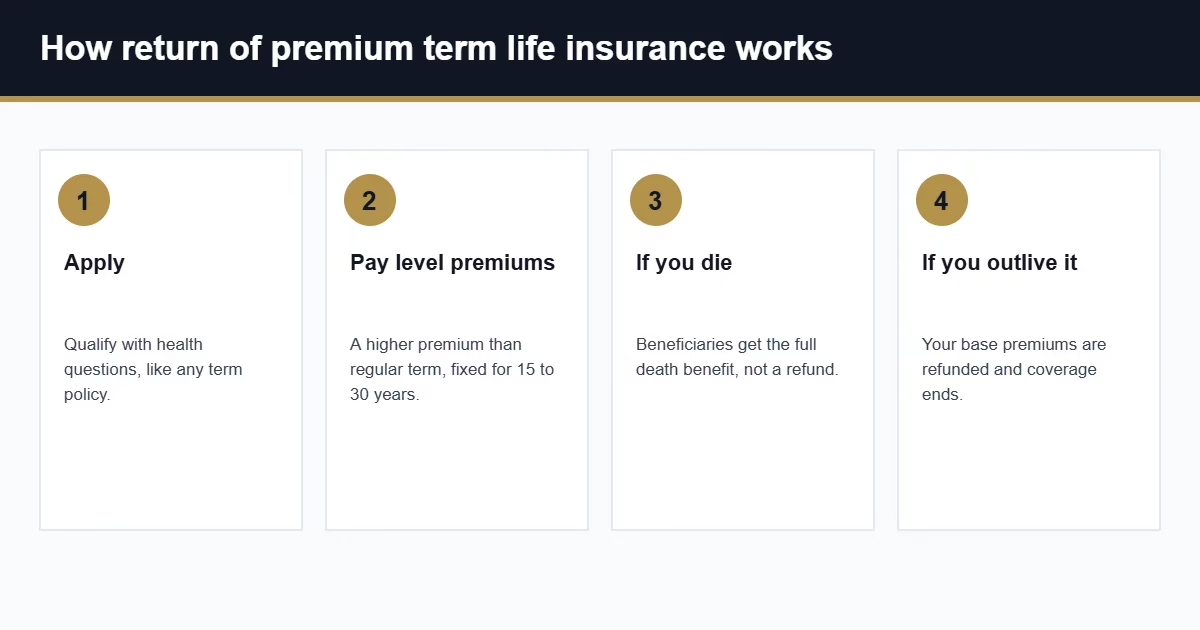
How Return of Premium Life Insurance Works
- Apply and qualify like any term policy, with health questions and sometimes an exam.
- Pay a level premium for the whole term, usually 15, 20 or 30 years. It’s higher than a regular term premium.
- If you die during the term, your beneficiaries receive the full death benefit. They don’t also get the premiums back.
- If you outlive the term and paid every premium, the insurer refunds your premiums and the coverage ends.
ROP Policy vs. ROP Rider
You’ll see return of premium sold two ways:
- A built-in ROP term policy, where the refund is part of the policy design and priced into one premium.
- A return of premium rider added to a regular term policy for an extra charge. Some riders refund the base premium only. Others refund the rider cost too. Read the rider’s wording carefully.
Fewer carriers offer return of premium than regular term, and those that do often limit it to certain ages and term lengths. That’s one reason comparing several carriers matters.
How Much More Does Return of Premium Term Life Insurance Cost?
A lot more. Policygenius says return of premium life insurance is usually two to three times as expensive as standard term (Policygenius), and Ethos says it can cost up to five times as much (Ethos). Here’s one published example: a healthy 25-year-old woman buying a 30-year, $250,000 policy (Haven Life, citing State Farm pricing):
| Policy | Monthly premium | Total paid over 30 years |
|---|---|---|
| Regular 30-year term | $14.57 | $5,245 |
| Return of premium 30-year term | $51.77 | $18,637 |
| Difference | $37.20 a month | $13,392 |
That’s about 3.5 times the cost of regular term. If she outlives the policy, she gets the $18,637 back. The real question is whether that refund is a better deal than keeping the extra $37.20 a month for herself.

Return of Premium vs. Investing the Difference
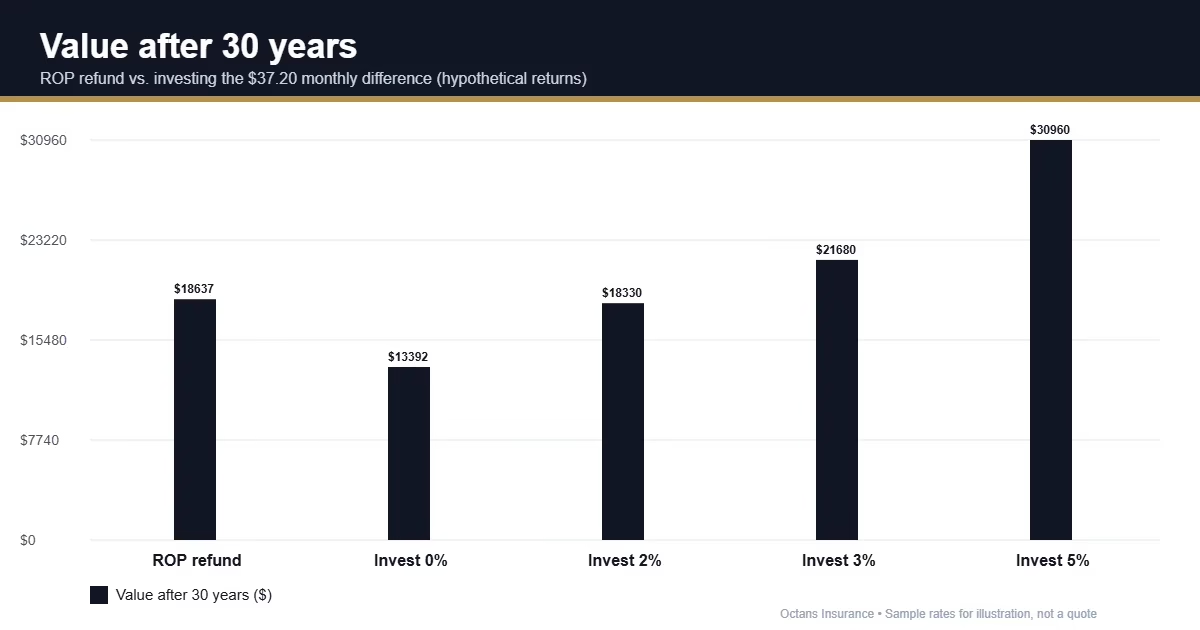
Using the example above, suppose she buys the regular term policy instead and puts the $37.20-a-month difference into savings or investments for 30 years. Both choices protect her family with $250,000 of coverage the whole time. Here’s what each leaves her with at the end (hypothetical returns, before any taxes on investment growth):
| Choice | Value after 30 years |
|---|---|
| Return of premium refund | $18,637 (usually not taxable) |
| Invest the difference at 0% | $13,392 |
| Invest the difference at 2% | About $18,330 |
| Invest the difference at 3% | About $21,680 |
| Invest the difference at 5% | About $30,960 |
In this example, the break-even point is roughly a 2% yearly return after taxes. If you would really invest the difference every month and earn more than that, regular term plus investing usually comes out ahead. If you know you would spend the difference, the forced savings of return of premium term life insurance can be worth it, as long as you keep the policy for the full term.
What If You Cancel a Return of Premium Policy Early?
This is the biggest risk. If you stop paying or cancel before the term ends, you usually get only part of your premiums back, and in the early years often nothing. Many policies use a schedule that starts paying a partial refund after a certain number of years and increases over time, reaching 100% only at the end of the term. Before you buy, ask for the refund schedule in writing.
Life changes can make canceling likely: a divorce, a job loss, or simply no longer needing coverage once the kids are grown and the mortgage is paid. If there’s a real chance you won’t keep the policy for 20 or 30 years, regular term is usually the safer choice.
Is the Return of Premium Refund Taxable?
Generally, no. Because the refund is a return of premiums you already paid with after-tax money, it usually isn’t treated as taxable income, as long as it doesn’t exceed what you paid in. Rules can differ if the policy pays more than your premiums or if you’ve taken other money out, so confirm with a tax professional. The death benefit paid to beneficiaries is also generally income-tax-free. See our guide: is life insurance taxable?
What Affects Return of Premium Rates?
Return of premium rates follow the same rules as regular term, with one twist: the insurer has to fund a refund for everyone who outlives the policy, and most people do. So the price depends on:
- Age: rates rise with every birthday, and many carriers stop offering return of premium at older ages.
- Health class and tobacco use: the same underwriting classes as regular term.
- Term length: longer terms give the insurer more time to invest your premiums, so the ROP markup on a 30-year term can be smaller than on a 15- or 20-year term.
- Face amount: a larger death benefit means larger premiums, and a larger refund.
Three Scenarios: How Return of Premium Plays Out
These simplified, hypothetical examples use the published prices above.
- She keeps the policy all 30 years. She receives about $18,637 back, tax-free in most cases. Her family was protected the whole time, and her “cost” of coverage was the lost growth on that money.
- She cancels after 12 years because her needs changed. Depending on the refund schedule, she may get back only a fraction of the roughly $7,455 she paid in, or nothing. Regular term would have cost her about $2,098 over the same 12 years.
- She dies in year 15. Her beneficiaries receive the $250,000 death benefit, the same as with regular term. The extra premiums she paid for the return feature are not added to the payout.
Return of premium works best in the first scenario. It’s a poor deal in the second.
Return of Premium Term Life Insurance Pros and Cons
| Pros | Cons |
|---|---|
| You get your base premiums back if you outlive the term | Costs about 2 to 5 times as much as regular term |
| Built-in forced savings for people who wouldn’t invest on their own | The refund earns no interest and loses value to inflation |
| Refund is generally not taxable | Canceling early usually forfeits most or all of the refund |
| Same death benefit protection during the term | Fewer carriers, ages and term lengths available |

Who Should Consider Return of Premium Term Life Insurance?
It may fit you if:
- You can easily afford the higher premium for the full term
- You’re confident you’ll keep the policy until the end
- You know you wouldn’t invest the difference on your own
- You dislike the idea of paying for coverage and “getting nothing back”
You should probably skip it if:
- The higher premium would force you to buy less coverage than your family needs
- You already invest steadily for retirement
- Your income is uncertain, or you may not need coverage for the full term
The most important rule: never buy a smaller death benefit just to afford the return of premium feature. Protecting your family comes first.
Return of Premium Term vs. Regular Term vs. Whole Life
| Regular term | Return of premium term | Whole life | |
|---|---|---|---|
| Coverage length | Set term (10–30 years) | Set term (often 15–30 years) | Lifetime |
| Relative cost | Lowest | About 2–5× regular term | Highest for the same death benefit |
| Money back if you outlive it | No | Yes, base premiums at the end of the term | Cash value builds over time |
| Access to money before the end | No | Partial refund on cancellation (per schedule) | Policy loans and withdrawals |
| Best for | Most families needing income protection | Savers who will keep it the full term | Lifelong needs and estate planning |
Compare the options in more detail in term vs. whole life insurance and term life insurance.
Return of Premium Term Life Insurance at Different Ages
In your 20s and 30s: premiums are low, so the dollar difference between regular term and return of premium term life insurance is smaller, and a 30-year term can run until just before retirement. But young families are often stretched thin. Make sure the higher premium doesn’t push you into buying less coverage than you need.
In your 40s: the price gap widens. A 20-year return of premium policy can line up with the years until your kids finish school, with the refund arriving around your early 60s. That’s a handy time for a lump sum.
In your 50s and up: return of premium becomes expensive and harder to find, and many carriers limit the ages and term lengths they’ll offer. Most people at this age get more value from regular term, guaranteed universal life or a final expense policy. See life insurance over 60.
Whatever your age, get both quotes for the same death benefit and term length. Then ask yourself one honest question: will I keep paying this policy every month until the very last year? If the answer is yes, return of premium can be a reasonable, low-risk way to get your money back. If you’re not sure, choose regular term and set up an automatic monthly transfer for the difference.
How to Shop for Return of Premium Life Insurance
Ask every carrier these questions before you buy:
- Exactly which premiums are refunded (base premium only, or riders and fees too)?
- What is the partial refund schedule if I cancel early, year by year?
- What happens to the refund if I convert the policy to permanent coverage?
- Are there age or term-length limits on the return of premium feature?
- What would the same death benefit cost as regular term? Compare the two side by side.
The NAIC’s life insurance consumer guide has more questions to ask before buying any life policy.
Alternatives to Return of Premium Term
- Regular term plus automatic savings: set up a monthly transfer equal to the price difference into a savings or retirement account.
- Convertible term: buy regular term with a strong conversion option, and convert part of it to permanent coverage later if your needs change.
- Whole life or guaranteed universal life: if you need coverage that never ends, a permanent policy may fit better than a term policy with a refund.
A licensed Octans agent can quote return of premium and regular term from several carriers so you can see the real price difference for your age and health.
Return of Premium Term Life Insurance FAQ
Is return of premium life insurance worth it?
It can be if you will keep the policy for the full term and wouldn’t invest the difference yourself. If you would invest the difference and earn more than about 2% a year after taxes, regular term usually comes out ahead.
Do you get interest on a return of premium refund?
No. The refund is the premiums you paid, without interest, so inflation reduces what it can buy by the time you receive it.
Can I add a return of premium rider to an existing policy?
Usually not. Return of premium is chosen when you apply. If you want it later, you would need to apply for a new policy at your current age and health.
What happens if I convert a return of premium term policy?
It depends on the carrier. Converting to permanent coverage may end the return of premium feature or change the refund, so ask before converting.
Does return of premium life insurance have a cash value?
Not in the way whole life does. Some policies pay a partial refund if you cancel after a certain number of years, based on a schedule in the contract.
Related Coverage and Guides
- Term life insurance
- Term vs. whole life insurance
- What happens when term life insurance ends
- Life insurance rates by age
- Whole life insurance
Sources: Policygenius, return of premium life insurance; Haven Life, is return of premium worth it; Ethos, return of premium life insurance; NAIC life insurance consumer guide.
Important: Octans Insurance agents are licensed in the states in which they operate. Coverage availability and rates may vary by state. Premium examples, when provided, are illustrative samples from published sources, not quotes. Final rates are determined by the insurance carrier based on underwriting and applicable policy criteria. Policy terms, exclusions, limitations, riders, and availability vary by carrier and state.
Ready to Compare Term Life Options?
Start with a free, no-obligation quote review with a licensed Octans agent.
(617) 935-9220 | life@octansinsurance.com