
Seniors
Life Insurance Over 60: 2026 Rates, Options, and Tips
Life insurance over 60 is still affordable for most healthy buyers. At 60, a 20-year, $250,000 term policy averages about $157 a month for women and $215 for men, while $10,000 of final expense coverage starts around $33 to $43 a month.
- Term, whole life, and final expense are all widely available in your 60s.
- Rates rise every year, so applying sooner saves money.
- Many people over 60 can qualify without a medical exam.
- Combining a small term policy with final expense coverage is common.
Table of Contents
What Does Life Insurance Over 60 Cost?
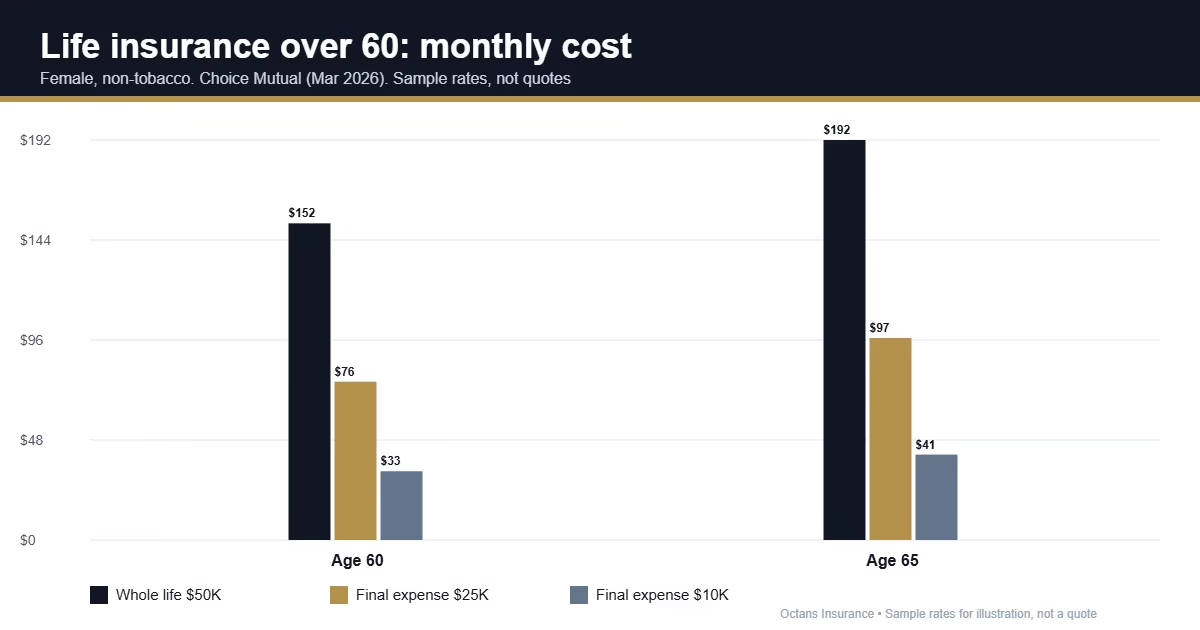
Life insurance over 60 costs more than it did at 50, but healthy applicants still have every major policy type available. These published sample rates show typical monthly premiums at 60 and 65.
| Policy | Age 60 (female / male) | Age 65 (female / male) |
|---|---|---|
| 20-year term, $250,000 | $157 / $215 | Ask for a quote |
| 20-year term, $500,000 | $286 / $395 | Ask for a quote |
| Whole life, $50,000 | $152 / $206 | $192 / $270 |
| Final expense, $25,000 | $76 / $103 | $97 / $130 |
| Final expense, $10,000 | $33 / $43 | $41 / $54 |
Sample rates, not quotes: term from MoneyGeek (non-smoker, average health, Oct 11, 2026); whole life and final expense from Choice Mutual (non-tobacco, valid Mar 9, 2026). Your price depends on health, tobacco use, carrier, and state.
Which Type of Life Insurance Is Best Over 60?
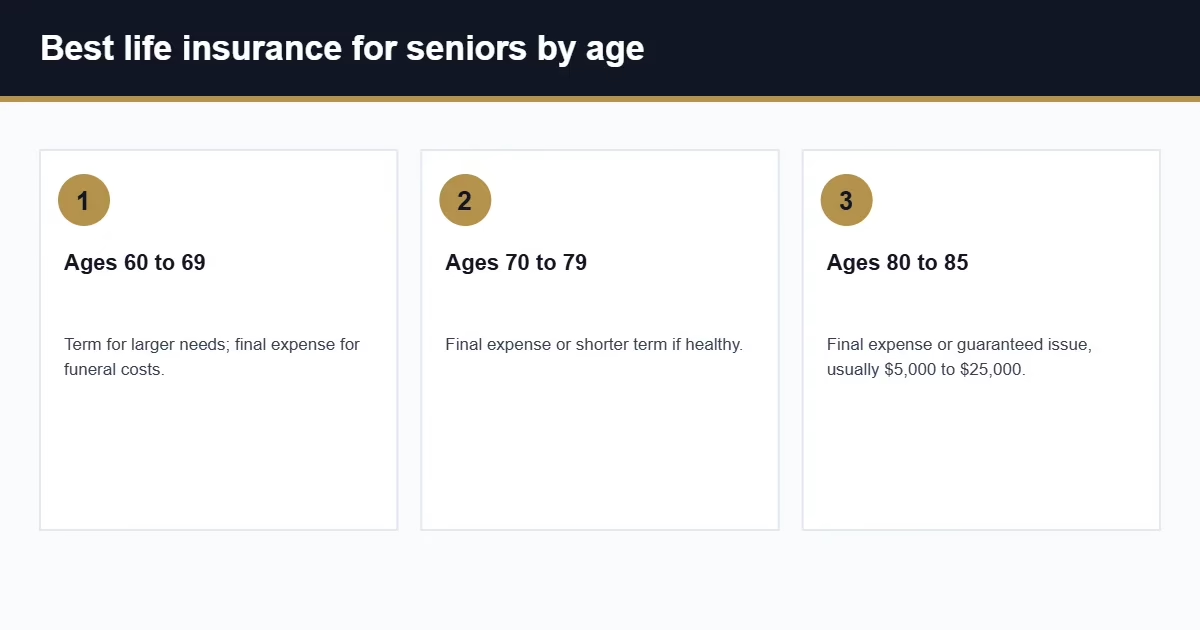
The right policy depends on whether your need is temporary or lifelong.
| Policy type | Best for people over 60 who… | Watch out for |
|---|---|---|
| Term life | still have a mortgage, debts, or a spouse relying on income | Coverage ends; renewal after the term is expensive |
| Whole life | want lifelong coverage and level premiums | Higher cost per $1,000 of coverage |
| Final expense | want $5,000 to $40,000 for funeral costs and final bills | Smaller benefit amounts |
| Guaranteed issue | have serious health conditions | A two-year graded benefit period |
Can You Get Term Life Insurance Over 60?
Yes. Most carriers sell 10-, 15-, and 20-year terms to healthy applicants in their 60s. Longer terms become harder to find as you approach 70, because carriers want coverage to end by a certain age. If you have a 30-year mortgage or a younger spouse, a 20-year term bought at 60 can cover the years your family needs most.
Do You Need a Medical Exam Over 60?
Not always. Some carriers offer accelerated underwriting without an exam; for example, Banner Life lists no-exam limits up to $500,000 for ages 61 to 70 when medical records support the application. Simplified issue final expense policies use health questions only, and no-exam life insurance options are often approved within days.
How Can You Lower Life Insurance Rates Over 60?
- Apply before your next birthday; rates rise each year.
- Choose the shortest term that covers your need.
- Stop tobacco use at least 12 months before applying.
- Compare several carriers, since underwriting for conditions like high blood pressure varies widely.
- Consider combining a smaller term policy with a final expense policy.
Is It Worth Buying Life Insurance at 60?
It depends on what would happen to the people you love if you died this year. Life insurance over 60 is usually worth it in these situations:
- Your spouse would lose income. When one spouse dies, the household usually keeps only the larger of the two Social Security checks, and some pensions shrink or stop. A policy can fill that gap. The Social Security Administration explains survivor benefits.
- You still have a mortgage or other debts you don’t want to leave behind.
- You want to cover your funeral so your children don’t have to.
- You want to leave money to children, grandchildren or a charity, or to pay estate costs.
- Your work coverage ends at retirement. Group life usually stops or becomes expensive to convert when you leave your job.
It may not be worth it if your debts are paid, your spouse would be financially secure, and you have savings set aside for final expenses.
How Much Life Insurance Do You Need at 60?
A simple worksheet. These numbers are a hypothetical example, so use your own:
| Need | Example amount |
|---|---|
| Mortgage balance | $120,000 |
| Other debts (car, cards) | $15,000 |
| Funeral and final costs | $12,000 |
| Spouse income gap: $1,000 a month for 10 years | $120,000 |
| Minus savings your spouse could use | −$60,000 |
| Coverage to consider | About $207,000 |
In this example, a $200,000 to $250,000 term policy covers the temporary needs, such as the mortgage and the income gap. A separate small whole life or final expense policy could cover funeral costs for life. Our how much life insurance do I need guide walks through each line.
What Is the Best Life Insurance for Seniors Over 60?
There isn’t one best policy or company. The best life insurance over 60 matches how long you need coverage and what you can qualify for. When comparing policies, look for:
- Level premiums for the full term, or for life on permanent policies
- Conversion rights on term policies, so you can switch to permanent coverage later without new health questions
- Living benefits that pay part of the death benefit for a terminal, chronic or critical illness (see life insurance with living benefits)
- Strong financial ratings, ideally A or better from A.M. Best
- Underwriting that fits your health, because one carrier may rate your blood pressure or diabetes much better than another
Guaranteed Universal Life: Lifetime Coverage for Less
Many healthy people in their 60s want coverage that lasts for life but find whole life too expensive. Guaranteed universal life (GUL) is built for this. It offers a guaranteed death benefit to a chosen age, often 90, 95, 100 or later, with a fixed premium. It builds little or no cash value, which is why it usually costs much less than whole life for the same death benefit. The trade-off: if you miss or underpay premiums, the guarantee can shorten or the policy can lapse. GUL is a common choice for leaving an inheritance or covering estate costs.
Life Insurance and Your Pension Choice
If you have a pension, you’ll usually choose between a single-life payout (higher monthly check, which stops when you die) and a joint-and-survivor payout (smaller check that continues for your spouse). Some couples take the larger single-life payout and use part of the difference to buy life insurance that protects the surviving spouse. This “pension maximization” approach can work, but only if the policy is large enough, affordable for life, and in force before you make the pension election, which usually can’t be changed. Get quotes and run the numbers with your financial advisor before you decide.
Life Insurance Over 60 With Health Conditions
| Condition | Likely route at 60+ |
|---|---|
| High blood pressure or cholesterol, controlled | Fully or accelerated underwritten term or whole life; often standard or better rates |
| Type 2 diabetes, controlled with pills | Fully underwritten or simplified issue, depending on A1C and complications |
| Heart attack or stent more than 2 years ago | Fully underwritten with a rating, or simplified issue final expense |
| Cancer in remission for several years | Possible fully underwritten coverage, depending on type and time since treatment |
| Recent cancer, COPD on oxygen, dialysis | Guaranteed issue whole life |
These are general patterns, not promises. Every carrier has its own rules. See our guides to life insurance with diabetes and after cancer.
Are TV and Membership Plans a Good Deal Over 60?
Plans advertised on TV or through membership groups are easy to buy, but they aren’t always the best value. Some sell small fixed “units” of coverage. Others are term policies whose premiums rise every few years as you move into a new age band. Before you sign up, ask three questions: What is the exact death benefit? Will the premium ever increase? Is there a waiting period? Then compare the cost per $1,000 of coverage with a level-premium policy from an independent agent. Read our Colonial Penn review for one example.
Mistakes to Avoid When Buying Life Insurance Over 60
- Canceling an old policy before the new one is approved. You could be left with nothing. Replacing a policy can also restart the contestability period, so compare carefully.
- Relying only on work coverage that ends at retirement
- Waiting another year. Prices rise with age, and a new diagnosis can limit your options.
- Buying guaranteed issue when you’d qualify for more. Answering a few health questions often gets you more coverage for less.
Life Insurance Over 60: What the Same Budget Buys
Using the sample rates above for a 60-year-old non-smoking woman, about $155 a month buys either:
- $250,000 of 20-year term life ($157 a month), which covers you to age 80, or
- $50,000 of whole life ($152 a month), which covers you for life and builds cash value.
That’s five times the coverage with term, but only for 20 years. The right answer depends on whether your biggest needs (a mortgage, a spouse’s income) end in the next 20 years or last for life. Many people over 60 split the budget, for example $150,000 of term plus a $10,000 final expense policy.
What Is the Cheapest Life Insurance Over 60?
For healthy applicants, the cheapest life insurance over 60 is usually a 10-year term policy. It covers the years before retirement or until the mortgage is paid, at the lowest monthly cost. The next cheapest options are 15- and 20-year term. Final expense and guaranteed issue policies cost more per $1,000 but are easier to qualify for. To find the lowest price you qualify for, compare several carriers. The same 62-year-old with controlled blood pressure can get very different offers.
Life Insurance Over 60 for Couples
Couples have two main choices:
- Two individual policies. Each spouse is insured separately, so the survivor receives a benefit when the first spouse dies. This is the usual choice when the goal is protecting income or paying off a mortgage.
- A survivorship (“second-to-die”) policy. One policy covers both spouses and pays only after both have died. It usually costs less than two individual policies and is often used for estate planning, leaving an inheritance or funding a trust for a child with special needs. It does nothing for the surviving spouse, though.
How to Buy Life Insurance Over 60 in 6 Steps
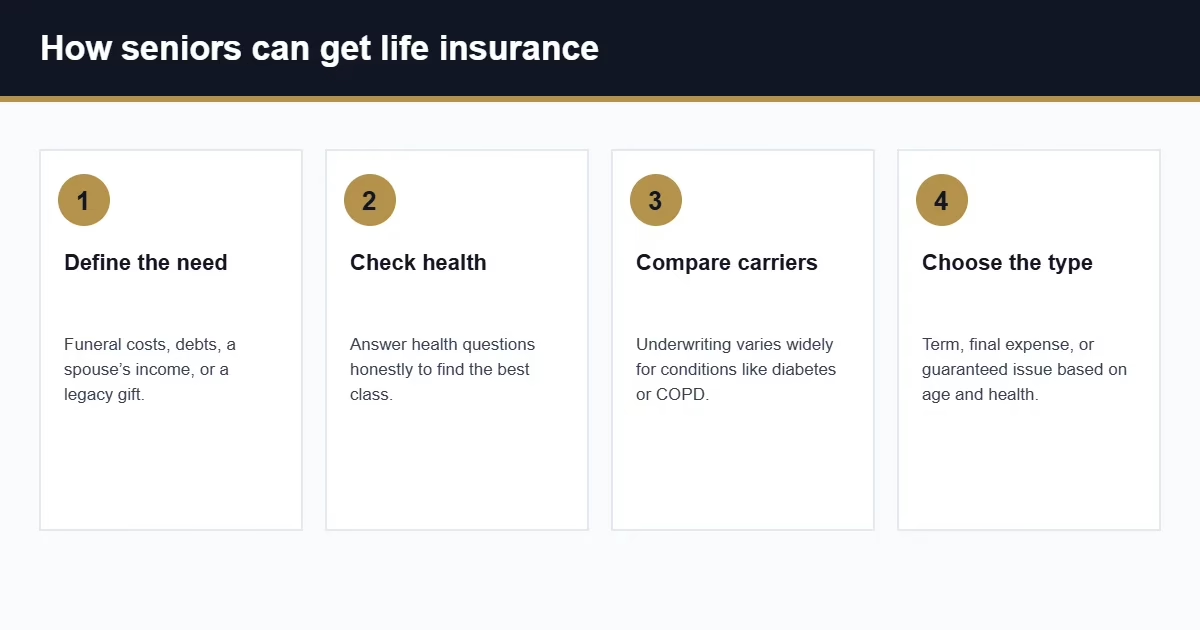
- List your needs: debts, income your spouse would lose, final expenses and any legacy goals.
- Decide how long each need lasts. Temporary needs fit term; lifelong needs fit whole life, guaranteed universal life or final expense.
- Gather health details: medications, doctors and dates of any major diagnoses.
- Compare quotes from several carriers through an independent agent.
- Apply, with or without an exam depending on the carrier and amount.
- Keep old coverage until the new policy is in force, then review your beneficiaries.
The Cost of Waiting: Buying at 60 vs. 65
The sample rates above show how much five years can add. A $50,000 whole life policy rises from $152 to $192 a month for a woman (about 26% more) and from $206 to $270 for a man (about 31% more). A $10,000 final expense policy rises from $33 to $41 for a woman and from $43 to $54 for a man. Because permanent premiums are locked in when you buy, those differences repeat every month for life.
Review the Coverage You Already Have
Before buying new life insurance over 60, check what you already own:
- Term policies ending soon. Note the end date and whether you can still convert to permanent coverage without health questions. Conversion deadlines are often tied to an age such as 65 or 70.
- Old whole life or universal life. Request an in-force illustration to confirm the policy will last at the current premium.
- Group coverage. Ask HR what happens at retirement and what conversion would cost.
- Beneficiaries. Update them after a marriage, divorce or death in the family.
Sometimes the best move is keeping or converting what you have rather than buying something new. A licensed Octans agent can review it with you at no cost.
Quick answer: life insurance over 60 is still widely available and often affordable, especially if you’re healthy and buy before 65. Start by deciding which needs are temporary and which last for life. Then compare term, whole life, guaranteed universal life and final expense quotes from several carriers before choosing.
Have questions about your situation? Call (617) 935-9220 to talk with a licensed Octans agent. There’s no obligation, and we’ll explain every option in plain English, including when you may not need more coverage at all.
Life Insurance Over 60 FAQ
Is it worth getting life insurance over 60?
It is worth it if someone depends on your income, you still have debts, or you want to cover funeral costs so your family does not have to.
How much life insurance should I have at 60?
Enough to pay off remaining debts plus final expenses and any income your spouse needs. Many people choose $10,000 to $25,000 for final expenses plus a term policy for larger needs.
Can I get life insurance at 65 with health problems?
Often yes. Simplified issue policies accept many common conditions, and guaranteed issue coverage accepts everyone in its age range.
Related Coverage and Guides
- What happens when your term policy ends
- Life insurance for seniors
- Life insurance over 70
- Life insurance rates by age
Sources: MoneyGeek term rates by age; Choice Mutual life insurance cost; Legal & General America underwriting guide.
Important: Octans Insurance agents are licensed in the states in which they operate. Coverage availability and rates may vary by state. Premium examples, when provided, are illustrative samples from published sources, not quotes. Final rates are determined by the insurance carrier based on underwriting and applicable policy criteria. Policy terms, exclusions, limitations, riders, and availability vary by carrier and state.
Ready to Compare Your Options?
Start with a free, no-obligation quote review with a licensed Octans agent.
(617) 935-9220 | life@octansinsurance.com