
Octans Insurance
Supplemental Health Insurance: Extra Financial Protection for Covered Health Events
Supplemental health insurance is designed to work alongside major medical coverage by providing additional benefits after certain covered accidents, illnesses, hospital stays, or other specified events. The benefits can help households manage expenses that may remain even when primary health insurance is in place.
- Designed to complement major medical health insurance
- Accident, hospital indemnity, critical illness, and other options may be available
- Benefits and payment structures depend on the policy
- Coverage, exclusions, limitations, and availability vary by carrier and state
120+ Carriers Compared | All 50 States | Multiple Coverage Options | Free Quotes
- Supplemental health insurance pays cash benefits for covered events such as hospital stays, accidents, cancer, or critical illness.
- It works alongside major medical or Medicare; it does not replace them.
- Benefits are paid to you and can be used for deductibles, travel, or household bills.
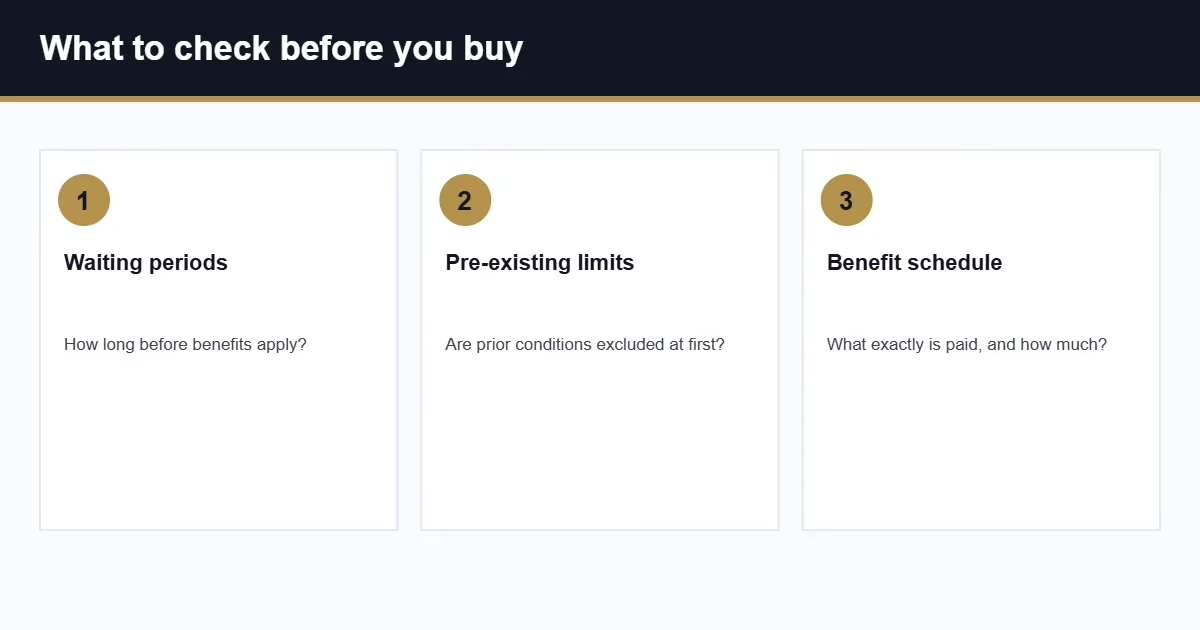
- Read waiting periods, pre-existing condition limits, and benefit schedules carefully.
Table of Contents


What Is Supplemental Health Insurance?
Supplemental health insurance is limited-benefit coverage designed to add financial protection alongside primary health insurance. It is not generally intended to replace comprehensive major medical coverage. Instead, a supplemental policy can provide benefits when a covered event meets the definitions and requirements in the contract.
Depending on the product, supplemental coverage may focus on accidents, hospitalization, critical illnesses, specified diseases, or other defined risks. Some policies pay fixed or specified benefits rather than reimbursing the exact amount of a medical bill.
How Supplemental Health Insurance Works
- You choose a supplemental policy. Available products depend on carrier, state, age, eligibility, and other requirements.
- A covered event occurs. The accident, illness, hospitalization, or other event must meet the policy definition.
- A claim is submitted. Documentation requirements vary by product and carrier.
- The insurer reviews the claim. Benefits are determined according to the policy’s schedule, definitions, exclusions, and limitations.
- Approved benefits are paid. The payment structure depends on the contract and may differ from your major medical plan.
Types of Supplemental Health Coverage
| Coverage Type | What It May Address | Key Consideration |
|---|---|---|
| Accident Insurance | Specified injuries, treatment, or services following covered accidents | Benefits follow the policy schedule and definitions |
| Hospital Indemnity | Covered hospital admissions, stays, or related events | Admission and confinement requirements vary |
| Critical Illness | Specified qualifying illnesses or conditions | Diagnosis must meet contractual definitions |
| Specified Disease | Benefits associated with diseases identified in the policy | Covered conditions and benefit amounts vary |
What Can Supplemental Coverage Help With?
Even with major medical insurance, a serious accident or illness can create expenses beyond a medical bill. Depending on how a supplemental policy pays benefits, households may use available funds to help manage deductibles, copays, transportation, childcare, household bills, or other financial pressures associated with a covered event.
The policy controls what benefits are payable. Supplemental insurance should not be described as paying every expense or eliminating all out-of-pocket costs.
Supplemental Health Insurance vs. Major Medical Insurance
Major medical insurance is designed to provide broad health coverage subject to its network, deductible, copay, coinsurance, and other plan provisions. Supplemental health insurance is narrower. It generally pays benefits tied to specific covered events or services.
For that reason, supplemental coverage is generally used in addition to comprehensive health insurance rather than as a substitute for it. Before purchasing a policy, review your existing health coverage and identify the financial gaps you are trying to address.
Who May Consider Supplemental Health Insurance?
Supplemental coverage may be considered by individuals or families who want additional financial protection against specified health events. It can also be offered as a voluntary employee benefit when an employer makes eligible supplemental products available.
The appropriate coverage depends on existing health insurance, emergency savings, household expenses, employment benefits, medical history, budget, and the specific risks the policy is designed to cover.
Common Mistakes That Can Leave Coverage Gaps
Treating Supplemental Insurance as Major Medical Coverage
Supplemental products are limited-benefit policies and generally are not substitutes for comprehensive health insurance.
Buying Without Reviewing Existing Benefits
Review employer benefits and current insurance first so you understand what financial gaps remain.
Assuming Every Diagnosis or Hospital Visit Qualifies
Benefits are payable only when the event satisfies the definitions and requirements in the contract.
Ignoring Exclusions and Waiting Periods
Exclusions, limitations, waiting periods, pre-existing condition provisions where applicable, and other restrictions can affect benefits.
COMPARE SUPPLEMENTAL COVERAGE OPTIONS
Hospital Indemnity Insurance
Hospital indemnity insurance pays a fixed cash amount when you’re admitted to the hospital, for example a set amount per admission plus a set amount for each day you stay. Some plans also pay for observation stays, ICU days, emergency room visits or outpatient surgery. The money goes to you, not the hospital, so you can use it for deductibles, copays, travel, child care or household bills while you recover.
It tends to be most useful if your health plan has a high deductible or daily hospital copays. Many Medicare Advantage plans, for example, charge a copay for each inpatient day. A simple, hypothetical example: if your plan charges $300 a day for the first five days of a hospital stay, a hospital indemnity policy paying $300 a day would cover that copay for a five-day stay. Read the plan’s rules on what counts as an “admission” and any waiting period for pre-existing conditions.
Critical Illness Insurance
Critical illness insurance pays a lump sum if you’re diagnosed with a covered condition. It usually covers heart attack, stroke and cancer, and often kidney failure, organ transplant or paralysis. Common benefit amounts range from about $10,000 to $50,000. Because the benefit is paid on diagnosis, you can use it for anything: treatment costs, lost income or mortgage payments during recovery.
What to check: the exact list of covered conditions and how each is defined, whether a second diagnosis pays again (recurrence benefits), any waiting period before coverage begins, and how pre-existing conditions are treated. Some life insurance policies include a critical illness benefit as a rider. See life insurance with living benefits.
Cancer Insurance
Cancer insurance is a narrower type of critical illness coverage that pays only for cancer. Some plans pay a lump sum on diagnosis. Others pay set amounts for specific treatments, such as chemotherapy, radiation, surgery or hospital stays. It can make sense for people with a strong family history of cancer who want extra cash for travel to treatment centers and costs their health plan doesn’t cover. Because it covers only one disease, many buyers prefer a broader critical illness policy at a similar price. Compare both before choosing.
Accident Insurance
Accident insurance pays set cash amounts for injuries from covered accidents, such as an emergency room visit, an ambulance ride, a fracture, a dislocation, stitches or physical therapy. It’s popular with active families and people with high-deductible health plans. Unlike most other supplemental coverage, there’s usually no waiting period for accidents. Many accident plans also include an accidental death benefit. We also offer stand-alone accidental death and dismemberment insurance.
Is Supplemental Health Insurance Worth It?
Supplemental health insurance is worth it when a big medical bill would strain your savings. A quick way to decide:
- Find your health plan’s deductible and out-of-pocket maximum. HealthCare.gov explains how the out-of-pocket limit works.
- Ask yourself whether you could pay that amount, plus a few months of lost income, from savings.
- If not, price a supplemental policy whose benefit roughly fills that gap.
It’s usually not worth it if you have a low-deductible plan and solid emergency savings, or if the premium would strain your budget. Supplemental policies pay fixed amounts and have exclusions. Treat them as a cash cushion, never a replacement for major medical insurance.
Supplemental Health Insurance and Medicare
People on Medicare often hear “supplemental” used two ways. A Medicare Supplement (Medigap) policy is a standardized plan that pays part of Original Medicare’s costs. The supplemental health products on this page, such as hospital indemnity, cancer, critical illness and accident, are separate. They pay you cash for specific events. Some people with Medicare Advantage add a hospital indemnity policy to help with inpatient copays. Federal rules generally prohibit selling a Medigap policy to someone enrolled in Medicare Advantage unless they’re switching back to Original Medicare. So ask a licensed agent which combination is right for you.
Are Supplemental Health Insurance Benefits Taxable?
Generally, benefits from a policy you pay for with after-tax dollars aren’t taxable income. If your employer pays the premium, or you pay through payroll with pre-tax dollars, some benefits may be taxable. Ask your employer or a tax professional about your situation.
Supplemental Coverage Through Work vs. Buying Your Own
Many employers offer accident, critical illness and hospital indemnity plans during open enrollment, paid by payroll deduction. Group plans can be convenient and sometimes skip health questions. But they may end when you leave the job, and the benefit amounts are set by the employer. An individual policy you own stays with you if you change jobs or retire, and you choose the benefit amounts. If you’re near retirement, ask whether your workplace plan is “portable”, meaning you can keep it by paying the insurer directly after you leave.
What Affects the Cost of Supplemental Health Insurance?
Prices vary by product and carrier. These factors matter most:
- Benefit amount: a $25,000 critical illness policy costs more than a $10,000 one.
- Age: critical illness and cancer coverage cost more as you get older. Accident coverage changes less with age.
- Tobacco use: many critical illness and cancer plans charge tobacco users more.
- Who’s covered: individual, couple or family plans
- Extra riders: recurrence benefits, wellness screening benefits or added ICU benefits
Ask for quotes at two or three benefit levels to see how much each added dollar of protection costs.
How to Choose a Supplemental Health Plan: 5 Questions
- What specific gap am I trying to fill: a deductible, hospital copays, lost income or travel for treatment?
- Exactly what triggers a payment, and how is each event defined?
- Is there a waiting period, or a pre-existing condition limit?
- Will my premium rise with age, or is it level?
- Can I keep the policy if I change jobs, retire or move to another state?
A licensed Octans agent can compare hospital indemnity, critical illness, cancer and accident plans side by side, and tell you honestly if your current coverage already does the job.
Common Exclusions to Read Before You Buy
Every supplemental health policy lists what it won’t pay for. Exclusions vary, but these are common:
- Pre-existing conditions diagnosed or treated in a set period before the policy started, often for the first 6 to 12 months of coverage
- Waiting periods, for example a 30-day wait before a cancer diagnosis is covered
- Self-inflicted injuries, and injuries while intoxicated or committing a crime
- Certain high-risk activities, such as some motor sports or aviation, on accident plans
- Conditions not on the covered list for critical illness plans
Read the outline of coverage, a short summary insurers provide, before you buy. If anything is unclear, ask your agent to point to the exact policy language.
Tip: Keep your supplemental policies with your health insurance cards and tell a family member they exist. Claims usually need to be filed within a set time after the event, and many benefits go unclaimed simply because nobody remembered the policy during a hospital stay. Save the insurer’s claim phone number in your phone today, and keep copies of hospital discharge papers.
Supplemental Health Insurance FAQs
What is supplemental health insurance?
Supplemental health insurance is coverage designed to provide benefits in addition to major medical health insurance. Depending on the policy, benefits may be paid after covered accidents, illnesses, hospital stays, or other specified events.
How does supplemental health insurance work?
A supplemental policy pays benefits according to its contract when a covered event or service meets the policy requirements. Benefit amounts, exclusions, waiting periods, and claim requirements vary by product and carrier.
Is supplemental health insurance the same as major medical insurance?
No. Supplemental health insurance is generally designed to complement, not replace, comprehensive major medical coverage.
What can supplemental health insurance help with?
Depending on the policy, benefits may help with deductibles, copays, transportation, household expenses, lost-income pressures, or other costs associated with a covered event. The policy determines what benefits are payable.
What types of supplemental health coverage are available?
Products may include accident, hospital indemnity, critical illness, specified disease, and other limited-benefit coverage. Availability varies by carrier and state.
Does supplemental health insurance pay cash directly to me?
Some supplemental policies pay fixed or specified benefits to the insured or policyholder, while others may use different payment arrangements. Review the contract for the exact benefit structure.
Can I have supplemental coverage with employer health insurance?
Often, yes, subject to product eligibility and policy terms. Supplemental coverage is commonly used alongside employer or individual major medical coverage.
How should I compare supplemental health insurance plans?
Compare covered events, benefit amounts, premiums, exclusions, limitations, waiting periods, claim requirements, renewability provisions, and how the policy coordinates with your existing coverage.
Compare Supplemental Health Insurance With Octans Insurance
Octans Insurance helps individuals, families, and employers review available insurance options from multiple carriers. We can help explain how supplemental coverage works alongside existing health benefits and what policy provisions to compare.
Use our Easy Quote Tool, learn more about Octans Insurance, or review our Life Insurance With Living Benefits information.

Related Coverage and Guides
- Accidental death and dismemberment (AD&D) coverage
- Medicare basics
- Life insurance with living benefits
- Accidental death coverage
Sources: NAIC Life Insurance Buyer’s Guide.
Important: Octans Insurance agents are licensed in the states in which they operate. Coverage availability and rates may vary by state. Premium estimates are for illustrative purposes. Final rates are determined by the carrier at the time of underwriting. Supplemental health insurance is generally limited-benefit coverage and is not a substitute for comprehensive major medical insurance. Covered events, benefit amounts, exclusions, limitations, waiting periods, renewability, eligibility, and availability vary by carrier, product, and state. The insurance contract controls coverage and benefits.
Ready to Compare Supplemental Health Insurance?
Review available supplemental coverage based on your current benefits, financial protection goals, budget, and eligibility.
(617) 935-9220 | life@octansinsurance.com