
Carrier Review
Gerber Grow-Up Plan Review: Children’s Whole Life Insurance (2026)
The Gerber Grow-Up Plan is whole life insurance for children ages 14 days to 14 years. Coverage starts at $5,000, doubles at age 18 at no extra cost, and comes with a guaranteed option to buy more coverage as an adult, but it is not the cheapest way to protect a child.
- Whole life coverage for children ages 14 days to 14 years.
- Coverage doubles after age 18 with no premium increase.
- A Guaranteed Purchase Option lets your child add coverage later without health questions.
- A child rider on a parent policy can cost less for pure protection.
Table of Contents
What Is the Gerber Life Grow-Up Plan?
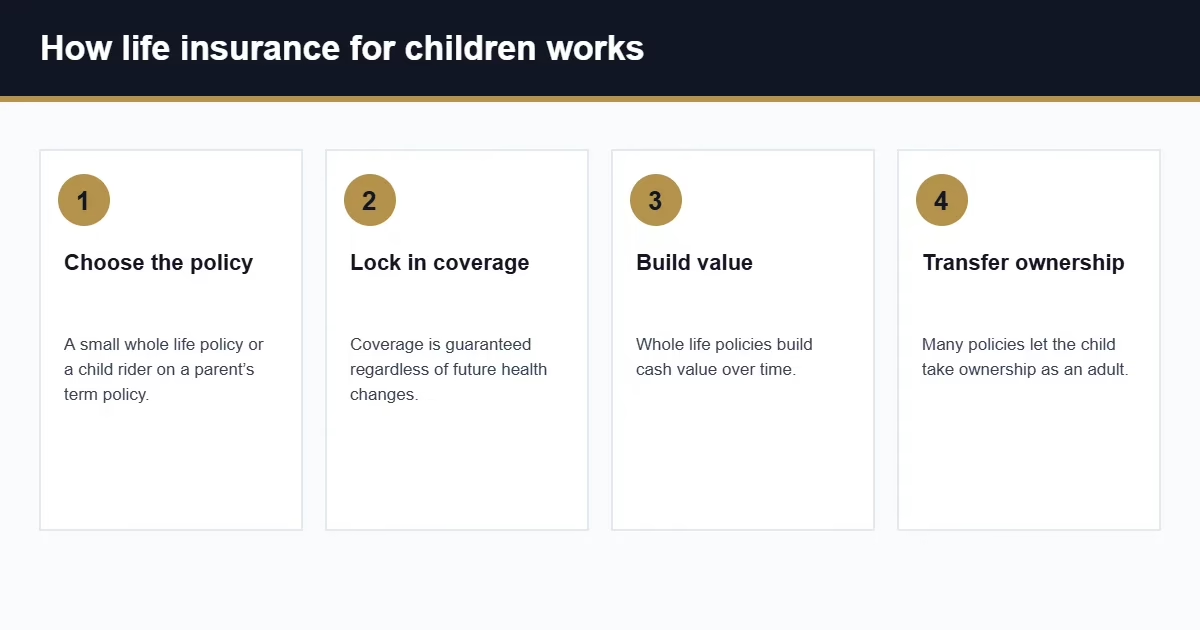
The Gerber Life Grow-Up Plan is a whole life insurance policy for children ages 14 days to 14 years. A parent, grandparent, or legal guardian owns the policy until the child turns 21, then ownership passes to the child. Premiums stay level for life as long as they are paid.
Get a Grow-Up Plan quote from Gerber Life
What Are the Key Features of the Grow-Up Plan?
| Feature | Detail |
|---|---|
| Issue ages | 14 days to 14 years (ages 15 to 17 use Gerber’s Young Adult plan) |
| Coverage | Starts at $5,000; maximum depends on state and age |
| Coverage doubling | Doubles on the policy anniversary after age 18, with no premium increase (policies issued 2009 or later) |
| Premiums | Level for life; Gerber’s sample rates assume automatic bank payments |
| Cash value | Builds over time; policy loans available |
| Ownership | Transfers to the child at age 21 |
| Guaranteed Purchase Option | Child can add coverage up to four times as an adult with no health questions |
Source: Gerber Life product pages (accessed Oct 12, 2026). Terms vary by state; confirm in your quote.
How Does the Guaranteed Purchase Option Work?
Standard-issue Grow-Up policies include a Guaranteed Purchase Option. Your child can buy additional coverage at adult rates, with no medical exam or health questions, in a 90-day window after turning 21 and after events such as marriage, the birth of a child, or reaching ages 25 and 35, up to four times. Gerber describes total purchases of up to 10 times the original coverage, to a $100,000 limit.

What Are the Pros and Cons of the Grow-Up Plan?
| Pros | Cons |
|---|---|
| Locks in insurability for life, even if health changes | Coverage amounts are small compared with an adult policy |
| Low, level premiums that never increase | Cash value grows slowly; it is not a strong savings vehicle |
| Coverage doubles at 18 at no extra cost | A term rider on a parent’s policy can be cheaper for pure protection |
| Guaranteed option to buy more as an adult | Premiums continue for life unless the policy is surrendered |

Is the Grow-Up Plan Better Than a Child Rider?
A child term rider on a parent’s term life policy covers all your children for one small premium, but it ends when the parent policy ends or the child ages out. The Grow-Up Plan costs more per child but gives your child their own lifelong policy and guaranteed future insurability. Read our guide to life insurance for children to compare both.
Who Should Consider the Grow-Up Plan?
- Families with a history of conditions that could make coverage hard to get later.
- Grandparents who want to give a lasting gift.
- Parents who want a small policy for final expenses and guaranteed future coverage.
If your goal is saving for college, a 529 plan or other savings account usually grows faster than child whole life cash value.

Get a Grow-Up Plan quote from Gerber Life
Octans Insurance may receive a commission if you buy through this link. See how we get paid.
How much does the Gerber Grow-Up Plan cost?
Gerber doesn’t publish a full rate table, but it does share two samples. Both assume automatic payments from a bank account.
- $5,000 of coverage: $3.70 a month for a child under 1 in Delaware, as of March 2026, per the Grow-Up Plan page.
- $10,000 of coverage: “less than $2 a week” for a 1-year-old girl, per Gerber’s “Is it worth it?” article.
Gerber says premiums depend on the child’s age when you buy, the coverage amount and your state, and that the lower the starting age, the lower the lifetime rate.
Here is a hypothetical example using the $3.70 sample. Over 18 years, you would pay $799.20 in total. By then, the $5,000 policy would have doubled to $10,000 (for policies issued in 2009 or later). After the doubling you’d be paying about $0.37 a month per $1,000 of coverage. That’s our arithmetic, not a quote, and your rate will differ.
To get the most accurate price, have these ready when you request a quote:
- Your child’s exact age. Buying a few years earlier can mean a lower rate for life.
- The coverage amount you want, between $5,000 and $50,000.
- Your state of residence, since rates and forms vary by state.
- How you plan to pay. Gerber’s samples assume automatic bank payments, so your price may differ if you pay another way.
Gerber notes that “benefit amounts are subject to overinsurance limits,” so the amount you can buy may depend on other coverage your child already has.
Who issues the Grow-Up Plan, and how is Gerber Life rated?
The Grow-Up Plan is issued by Gerber Life Insurance Company, which says on its product page that it is part of Western & Southern Financial Group. In February 2024, Western & Southern reported that AM Best upgraded Gerber Life’s financial strength rating to A+ (Superior) from A (Excellent). On the AM Best scale published by Securian Financial, only A++ ranks higher.
Ratings can change, so check the current one before you buy. A rating also doesn’t tell you about customer service. The NAIC lets you look up complaint data by state, company and insurance type for the past three years. Use the full legal name, Gerber Life Insurance Company, pick the life insurance line, and compare the result with one or two other insurers of a similar size.
How do cash value and policy loans work on the Grow-Up Plan?
The Grow-Up Plan is whole life, so part of each premium builds cash value over time. Gerber is upfront that this is slow: its product page says, “Cash value may take years to accumulate.” Here’s what Gerber says you can do with the cash value:
- Borrow against it while premiums are being paid, at a loan interest rate of “up to 8%.”
- Surrender the policy and receive the available cash value, minus any loan you still owe.
- Help keep coverage going. Gerber says it may be able to use cash value to pay premiums if you can’t.
Gerber also warns that loans and withdrawals may create a tax liability, reduce the cash value and death benefit, and could cause the policy to lapse. A hypothetical example: you borrow $300 at 8% and don’t repay it. After two years of interest compounding once a year, you’d owe about $350, and the death benefit would be reduced by that amount.
How much coverage can the purchase option really add?
The Guaranteed Purchase Option is often the main reason parents choose this plan. It lets your child buy more coverage as an adult, at standard age-based rates, “regardless of health or occupation,” per Gerber’s product page. Gerber’s article says the total can reach 10 times the original amount. A hypothetical example:
| Original policy | Coverage after doubling | Up to 10x original in added coverage |
|---|---|---|
| $5,000 | $10,000 | Up to $50,000 |
| $10,000 | $20,000 | Up to $100,000 |
Check the exact limits in your policy and rider form, since the purchase option has its own rules and caps. A 30-year-old with a mortgage or children may want far more coverage than this. If that adult is healthy, published samples show $250,000 of 20-year term at $23 to $26 a month (MoneyGeek, October 11, 2026). So the purchase option matters most if your child develops a health condition that makes regular coverage hard to get. If your child stays healthy, they may never use it.
Gerber Grow-Up Plan vs a 529 plan vs a child rider
Parents often compare three options. Each does a different job.
| Feature | Gerber Grow-Up Plan | Child term rider | 529 plan |
|---|---|---|---|
| What it is | Whole life on one child | Term add-on to a parent’s policy | Education savings account |
| Who’s covered | One child per policy | Typically all children, including future ones | No life coverage |
| Coverage amount | $5,000 to $50,000; doubles after 18 | Often $1,000 to $25,000 | None |
| How long it lasts | For life while premiums are paid | Often ends between 18 and 25, or when the parent turns 65 | Until the money is used |
| Future insurability | Guaranteed Purchase Option rider | Conversion, often before age 25 | None |
| Tax on growth | Loans and withdrawals may create tax liability | No cash value | Earnings for qualified education not subject to federal tax |
Sources: Gerber Life; Western & Southern child term rider guide (updated September 18, 2025); IRS 529 Q&A. The IRS also says 529 qualified expenses include up to $10,000 a year of elementary or secondary school tuition, and funds can move to another family member’s 529 plan without tax. If you want lifelong coverage for one child, the Gerber Grow-Up Plan fits that job. If you want low-cost coverage for all your kids during childhood, a rider may fit better. If you want to save for school, a 529 plan is built for that.
How do you apply for the Grow-Up Plan?
Gerber sells the plan directly. According to its product page:
- Who can buy: parents, grandparents and legal guardians.
- Who can be covered: the product page now lists eligible ages as 14 days through 17 years, while Gerber’s learn article describes the Grow-Up Plan for children through age 14 and refers older teens to other products (1-800-425-8394). If your child is a teen, ask which plan applies.
- Residency: the child must be a U.S. citizen living in the U.S. or a permanent legal resident.
- How: get a quote online or call 800-704-3331, Monday to Friday, 8 a.m. to 7 p.m. ET.
- More than one child: complete a new application for each child.
Gerber says a Buyer’s Guide to Life Insurance and a Policy Summary are sent with every policy. Read both during your free look period; in North Carolina, for example, the Department of Insurance requires at least 10 days to return a new policy for a full refund.
What happens if you can’t keep paying?
A whole life policy is a long-term bill, and coverage continues “as long as premium payments are made.” If money gets tight, call Gerber before you miss a payment and ask what choices your policy offers.
- Grace period. Life policies give a short window to catch up on a missed payment. North Carolina sets a minimum of 31 days, per the NC Department of Insurance. Check your policy for your state’s rule.
- Cash value help. Gerber says it may be able to use cash value to pay premiums, though in the early years there may be little to draw on.
- Surrender. You can cancel and take whatever cash value is available, minus any loans. Once surrendered, the coverage and the future purchase rights end.
If a grandparent is paying, agree up front on who will take over the premium if they can’t. Gerber’s sample premiums are well below the IRS annual gift tax exclusion of $19,000 per person for 2026, so gift tax is unlikely to be a concern.
Is the Gerber Grow-Up Plan right for your family? A quick checklist
The Gerber Grow-Up Plan may be a good fit if you can answer “yes” to most of these:
- Both parents already have enough life insurance of their own.
- You want coverage that lasts for your child’s whole life, not just until 18 or 25.
- You value the right for your child to buy more coverage later without health questions.
- You can commit to a small premium for many years.
- You’re saving for college separately, such as in a 529 plan.
- You’ve checked whether your own life insurance could add a child rider, and compared the cost of both options side by side over many years.
Before you sign, read the Policy Summary for three numbers: the monthly premium, the coverage before and after the doubling, and the cash value shown for later years. It may not be the best fit if the parents are uninsured, if you mainly want a college fund, or if you have several children and a parent’s policy offers a low-cost child rider. Our licensed agents can compare a child rider on a parent’s term life policy with the Gerber Grow-Up Plan for your family. You can also read our guide, Is child life insurance worth it?
Gerber Grow-Up Plan FAQ
Is the Gerber Grow-Up Plan worth it?
It can be worth it if you want to lock in your child’s future insurability or leave a lasting gift. For college savings, a 529 plan usually grows faster.
What age does the Gerber Grow-Up Plan double?
For policies issued in 2009 or later, coverage doubles on the policy anniversary after the child reaches age 18.
Can I cash out a Gerber Grow-Up Plan?
Yes. The policy builds cash value over time; you can borrow against it or surrender the policy for its cash value.
Related Coverage and Guides
- Is child life insurance worth it?
- Life insurance for children
- Life insurance for parents
- Gerber Life Guaranteed Issue
Sources: Gerber Life: life insurance questions; Gerber Life: Guaranteed Purchase Option rider.
Important: Octans Insurance agents are licensed in the states in which they operate. Coverage availability and rates may vary by state. Premium examples, when provided, are illustrative samples from published sources, not quotes. Final rates are determined by the insurance carrier based on underwriting and applicable policy criteria. Policy terms, exclusions, limitations, riders, and availability vary by carrier and state.
Ready to Compare Your Options?
Start with a free, no-obligation quote review with a licensed Octans agent.
(617) 935-9220 | life@octansinsurance.com