
Octans Insurance
Life Insurance for Children: Permanent Protection That Can Grow With Them
Life insurance for children is typically permanent coverage purchased by a parent, grandparent, or other eligible adult. A juvenile whole life policy can provide lifelong protection when policy requirements are met and may build cash value over time.
- Permanent life insurance designed for children
- Premiums are generally designed to remain level
- Cash value can accumulate according to the policy contract
- Coverage may continue into adulthood when policy requirements are met
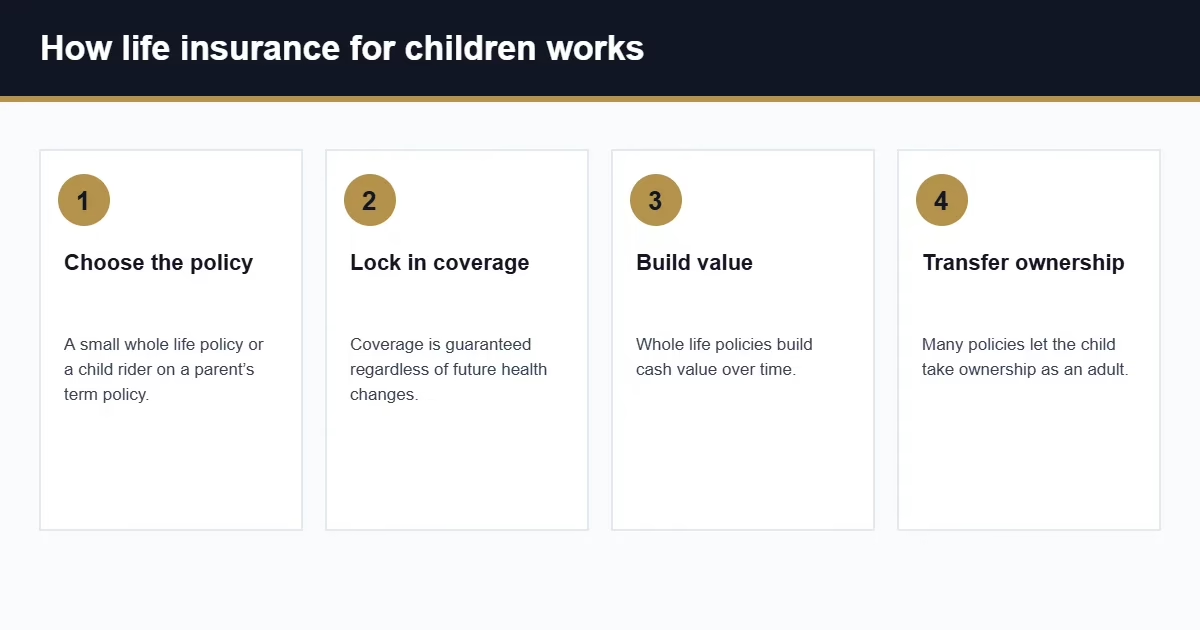
- Life insurance for children is usually a small whole life policy or a child rider added to a parent’s term policy.
- It can lock in insurability and low rates, but it is not a substitute for covering the parents’ income.
- Child riders often cost a few dollars a month and cover all children in the household.
- Review whether college savings or parent coverage should come first.
Table of Contents

What Is Life Insurance for Children?
Life insurance for children, sometimes called juvenile life insurance, is coverage issued on the life of a child. These policies are commonly structured as whole life insurance and are generally purchased and owned by a parent, grandparent, or another eligible adult.
Unlike term coverage designed for a limited period, juvenile whole life insurance is intended to provide permanent protection when required premiums are paid and other policy requirements are satisfied. Traditional whole life policies also include a cash value component that develops according to the policy contract.
How Does Children’s Life Insurance Work?
- Choose a coverage amount. Available face amounts depend on the carrier, product, child’s age, and eligibility requirements.
- Apply for the child. The policy owner completes the application and provides information required by the insurer.
- Complete underwriting. Underwriting requirements for juvenile coverage vary by carrier and product.
- Pay the required premium. Traditional juvenile whole life policies commonly use premiums designed to remain level.
- Maintain the policy. Coverage can continue as the child becomes an adult when premiums and policy requirements are satisfied.
Children’s Whole Life vs. Adult Term Life Insurance
| Feature | Children’s Whole Life | Adult Term Life |
|---|---|---|
| Coverage period | Designed as permanent coverage when policy requirements are met | Coverage for a specified term |
| Cash value | Typically included | Generally none |
| Premium structure | Often designed to remain level | Often level during the initial term |
| Insured | Child | Adult applicant |
Why Do Families Consider Life Insurance for Children?
Families consider juvenile life insurance for different reasons. Some want permanent coverage established at a young age. Others value predictable premiums, the cash value component of whole life insurance, or policy features that may allow coverage to continue into adulthood.
A child life insurance policy is not a substitute for adequate life insurance on parents or other household income earners. Families should consider their overall protection needs, emergency savings, debts, and budget when deciding where juvenile coverage fits within their financial priorities.
Understanding Cash Value in a Child Life Insurance Policy
Traditional juvenile whole life insurance generally includes cash value that develops over time according to the policy’s guarantees and provisions. Actual policy values depend on the contract, premiums, policy duration, and other policy terms.
When available, policy loans or withdrawals can affect cash value and the death benefit and may create other consequences. Policy loans generally accrue interest. The specific contract should be reviewed before accessing policy values.
Can Children’s Life Insurance Continue Into Adulthood?
Permanent juvenile life insurance is generally designed to continue beyond childhood when the policy remains in force. Ownership can potentially be transferred at an appropriate time, subject to the policy and carrier procedures.
Some policies or riders may provide opportunities to purchase additional coverage later, subject to their specific terms and limits. These features vary by insurer and should not be assumed to be included in every children’s life insurance policy.
How Much Life Insurance Should You Buy for a Child?
The appropriate amount depends on the family’s goals, budget, existing insurance, and the products available from the carrier. Juvenile policies often use smaller face amounts than adult income-replacement policies.
Because permanent coverage is intended to remain in force for many years, affordability matters. Families should choose a premium that can reasonably be maintained rather than focusing only on the largest available death benefit.
Common Children’s Life Insurance Mistakes
Buying Child Coverage Before Protecting Household Income
Parents and other income earners often have larger financial protection needs. Juvenile coverage should be considered within the family’s overall insurance plan.
Assuming Every Policy Has the Same Future Purchase Options
Riders and opportunities to increase coverage vary by carrier and contract. Review the actual policy features before purchasing.
Expecting Cash Value to Grow Quickly
Whole life cash value develops over time according to the contract. Early cash values may be substantially less than total premiums paid.
Choosing a Premium That Is Difficult to Maintain
Permanent coverage is designed for the long term. A sustainable premium can be more important than selecting the maximum available coverage.
COMPARE LIFE INSURANCE OPTIONS


What Is the Best Life Insurance for a Child?
There are three main ways to insure a child. The best one depends on whether your goal is covering funeral costs, locking in future insurability, or both.
| Option | How it works | Best for | Watch out for |
|---|---|---|---|
| Child term rider on a parent’s policy | One small rider covers all your children, usually until age 18 to 25, and can often be converted to a permanent policy | Low-cost protection for several children at once | Ends when the rider expires or the parent’s policy ends |
| Juvenile whole life policy | A separate permanent policy on the child, with level premiums and cash value | Locking in lifelong coverage, especially if there’s a family history of health problems | Costs more per $1,000 of coverage; cash value grows slowly |
| Grow-up style plans (for example Gerber) | Juvenile whole life with features such as coverage doubling at 18 and a guaranteed purchase option | Families who want a gift that becomes the child’s own policy | Small face amounts; compare against a rider first |
Read our Gerber Grow-Up Plan review for one popular example.
Is It a Good Idea to Get Life Insurance on Your Child?
It can be, but it should come after the adults in the household are well insured. Your children depend on your income, not the other way around. If a parent’s death would leave the family short, put the budget there first. Once the parents are covered, a small child policy or rider makes sense if you want money set aside for funeral costs and time off work after a tragedy, or if you want to guarantee your child can buy coverage later no matter what health conditions develop. For a deeper look at the pros and cons, see is child life insurance worth it?
Some personal finance voices, including Dave Ramsey, say families should skip cash value policies on children and add a low-cost term rider to a parent’s policy instead. That approach suits many families. Others prefer juvenile whole life for the lifetime guarantee. Both are reasonable choices once the parents are protected.
Can Grandparents Buy Life Insurance for a Grandchild?
Yes. Grandparents often buy juvenile whole life as a gift. Insurers generally require the grandparent to have an insurable interest and the consent of the child’s parent or legal guardian, and some carriers ask a parent to sign the application too. The grandparent can own the policy and pay the premiums. It’s smart to name a successor owner, often a parent, so the policy keeps going if the grandparent dies before ownership passes to the grandchild.
Who Owns a Child’s Policy, and What Happens When They Grow Up?
The adult who applies (usually a parent or grandparent) owns the policy and controls it while the child is young. Many policies let the owner transfer ownership to the child at a set age, such as 18 or 21. Some plans do it automatically. Once the child owns it, they can keep paying the premiums, borrow against the cash value, or add coverage through a guaranteed purchase option if the policy has one.
With a child term rider, coverage usually ends at a stated age. Many riders let the child convert to a permanent policy, without health questions, for a set multiple of the rider amount. Note the deadline so the option isn’t lost.
How to Apply for Life Insurance for Children
- Decide on a rider or a separate policy. If you’re buying term coverage for yourself, price the child rider at the same time.
- Choose an amount. Many families choose enough to cover a funeral and a few months of lost work, often $10,000 to $50,000.
- Answer a few health questions. Child policies usually don’t need a medical exam. The questions ask about serious conditions, hospital stays and developmental issues.
- Name the beneficiary, usually the parents, and a successor owner if a grandparent owns the policy.
- Set up automatic payments. Some carriers offer a discount for bank draft.
Should You Use Children’s Life Insurance to Save for College?
Usually not as your main plan. The cash value in a child’s whole life policy grows slowly, especially in the early years. A 529 college savings plan is designed for education and offers tax-free growth for qualified expenses. Cash value in a life insurance policy generally isn’t counted on the FAFSA, which some families like. But for most families, the best mix is a 529 for college plus, if wanted, a small policy for protection and insurability. Read more in our article on life insurance for college.
How Soon Can You Get Life Insurance for a Baby?
Many juvenile policies accept children as young as 14 or 15 days old. For example, Gerber’s Grow-Up Plan starts at 14 days. Child term riders often start covering a newborn after a similar short waiting period, and some automatically include children born or adopted after the rider is added. If you’re expecting, ask your agent now whether your own policy can include a child rider. That way your new baby can be covered with little or no paperwork once they’re eligible.
Life Insurance for Children With Health Conditions
Children with serious conditions, such as congenital heart defects, cystic fibrosis, or some genetic or developmental conditions, may be declined or offered limited coverage on an individual policy. Options to explore:
- A child term rider. Some riders ask fewer health questions than a separate policy.
- Coverage through a parent’s employer. Group life plans often include optional dependent coverage with simple eligibility rules.
- Applying with several carriers. Underwriting rules for children vary more between insurers than many parents expect.
This is also the strongest argument for buying juvenile coverage early. A policy bought while a child is healthy stays in force even if a condition develops later. If the policy includes a guaranteed purchase option, the child can add coverage as an adult without new health questions.
Questions about life insurance for children? A licensed Octans agent can compare child riders and juvenile policies from several carriers in one conversation.
One more tip: keep a copy of your child’s policy with your own life insurance papers, and note any conversion or purchase-option deadlines on your calendar so a valuable guarantee isn’t missed years from now. Review the coverage again when your child turns 18.
Life Insurance for Children FAQs
Can you buy life insurance for a child?
Yes. Parents, grandparents, and other eligible adults may be able to purchase life insurance covering a child, subject to the insurer’s ownership, consent, relationship, and eligibility requirements.
What type of life insurance is commonly purchased for children?
Children’s life insurance is commonly structured as permanent whole life insurance. Available products and features vary by carrier.
Does children’s life insurance build cash value?
Traditional juvenile whole life insurance generally includes cash value that develops according to the guarantees and provisions of the policy.
Do premiums increase when the child becomes an adult?
Traditional whole life policies commonly use level premiums, but the actual premium structure is determined by the specific contract.
Can a child keep the policy as an adult?
Permanent juvenile coverage is generally designed to continue into adulthood when required premiums are paid and policy requirements are satisfied. Ownership arrangements depend on the contract and carrier procedures.
Can grandparents buy life insurance for grandchildren?
Grandparents may be able to purchase coverage for grandchildren, subject to carrier rules, required consent, insurable-interest requirements, and other applicable requirements.
Does buying life insurance for a child guarantee future insurability?
The existing policy can provide coverage according to its contract. Any right to purchase additional future coverage depends on the policy or rider terms and should not be assumed unless specifically provided.
How do I choose a child life insurance policy?
Compare premiums, guarantees, cash value provisions, available riders, coverage amounts, ownership provisions, carrier requirements, and long-term affordability.
Compare Life Insurance for Children with Octans Insurance
Octans Insurance is an independent insurance agency. We help families review available life insurance options and understand differences in permanent coverage, cash value, premiums, riders, underwriting, and carrier requirements.
Use our Easy Quote Tool, learn more about Octans Insurance, review Whole Life Insurance, or explore Term Life Insurance for adult protection needs.
Related Coverage and Guides
- Is child life insurance worth it?
- Gerber Grow-Up Plan review
- Gerber Life guaranteed issue
- Term life insurance
- Life insurance for parents
Sources: NAIC Life Insurance Buyer’s Guide.
Important: Octans Insurance agents are licensed in the states in which they operate. Coverage availability and rates may vary by state. Final rates and eligibility are determined by the insurance carrier under applicable product and underwriting requirements. Policy terms, exclusions, limitations, cash values, riders, issue ages, ownership requirements, and availability vary by carrier and state. Policy loans and withdrawals can reduce cash value and death benefits and may affect policy performance.
Ready to Explore Life Insurance for Children?
Review available permanent life insurance options based on your family’s goals, budget, and eligibility.
GET YOUR FREE LIFE INSURANCE QUOTE
(617) 935-9220 | life@octansinsurance.com