
Ensuring Maternal Security: The Imperative for Life Insurance
Life Insurance for Mothers: What This Guide Covers
This guide explains life insurance for mothers in plain language, reviewed by a licensed Octans agent. Use the summary below to jump to the section you need, and contact us with questions about your own situation.
- What life insurance for mothers means and who it applies to
- The rules, costs, and timelines to know
- Common mistakes to avoid
- When to talk to a licensed agent
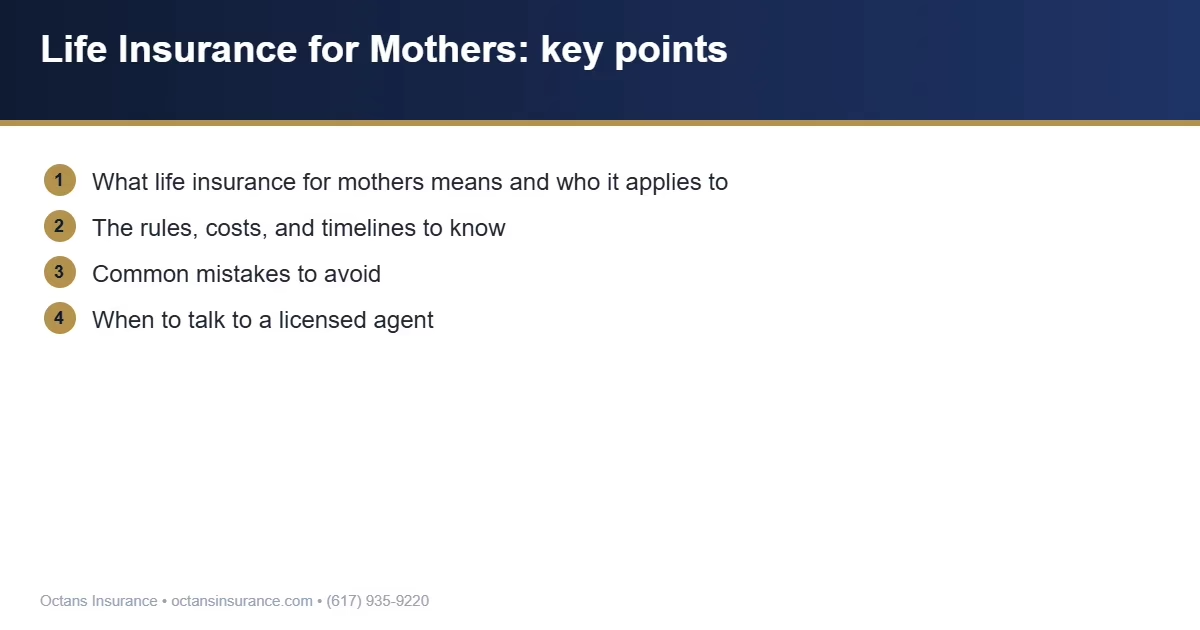
Table of Contents

When a woman dies in pregnancy, childbirth, or the postpartum period, it means there is an infant who will never know his or her mother. There is a tremendous sense of loss, grief, fear, and blame, as well as new, unexpected responsibility for the other parent and the family’s extended community.
The recent surge in maternal mortality rates in the United States has sounded an alarm, particularly for single mothers who face increased vulnerability during pregnancy. The Centers for Disease Control and Prevention (CDC) has reported a 40% increase in maternal mortality, revealing a disturbing trend that demands urgent attention. Various factors contribute to the heightened risk of pregnancy complications leading to maternal death.
These factors range from women conceiving at older ages to disparities in healthcare access and an upsurge in chronic health conditions which we will further discuss in the following sections.
This maternal crisis which is exceptionally more prevalent in minority communities underscores the importance of life insurance for pregnant women, especially for those without a partner—a demographic that includes an alarmingly high percentage of Black and Hispanic women who are disproportionately affected by maternal mortality. For soon to be single mothers who bear a disproportionate burden, navigating pregnancy without the support of a partner adds an additional layer of challenges, making them more susceptible to adverse health outcomes. The lack of a partner’s financial and emotional support underscores the need for protective measures like life insurance.

The CDC’s findings highlight significant racial disparities in maternal mortality rates, with Black women experiencing a maternal death rate 2.6 times higher than that of White women. This stark contrast underscores the systemic issues that disproportionately impact minority communities, exposing them to higher health risks. The reasons behind these disparities are complex, involving factors such as discriminatory practices, socio-economic inequalities, and inadequate access to quality healthcare.
Research, like the one indicated by Angela Dawson, director of the Ohio Commission on Minority Health, draws attention to the correlation between discriminatory practices like redlining and adverse health outcomes, including maternal mortality. Communities that have been historically redlined face a multitude of challenges, leading to higher rates of maternal mortality. Redlined communities are also at higher risk due to the disproportionate distribution of environmental pollution which you can read more about in our environmental justice section. This connection underscores the need for targeted interventions and support systems, including financial protection through life insurance.
Challenges in Early Detection and Diagnosis
Now, if you think you are healthy and experiencing pregnancy without much complications, you could be wrong. Dr. Monique Rainford, an obstetrician-gynecologist at Yale Medicine, emphasizes the challenge of recognizing early warning signs of pregnancy-related health complications. Even when symptoms are recognized, healthcare providers may inadvertently miss or cause delays in diagnosis, resulting in more severe or fatal consequences. The traditional 42-day postpartum period, considered the physiological recovery period, may not encompass the full spectrum of pregnancy-related risks, as some issues can manifest up to a year after childbirth. So, far more women are probably dying due to pregnancy/birth related complications than the number indicates.
The concept of “allostatic load,” representing the cumulative physiological effects of chronic stress, emerges as a significant factor. Studies reveal that Black women, facing higher levels of chronic stressors, exhibit a biological age up to 10 years older than their white counterparts. This accelerated aging significantly elevates the risk of maternal death, highlighting the impact of chronic stress, particularly stemming from experiences of racism.
This highlights the importance of being financially prepared for the worst case scenario – for the sake of your children, born and unborn. And Life insurance is one of the cheaper means of doing exactly that- safeguarding your family. It can change the fate of your entire future generation. Check out our other sections to see how life insurance breaks the vicious cycle of intergenerational poverty.
Bias in Healthcare: A Contributing Factor
Dr. Rainford, the author of “Pregnant While Black: Advancing Justice for Maternal Health in America.” identifies overt and implicit bias from healthcare providers as additional contributors to the maternal mortality crisis. Instances reported in the news reveal Black women and families experiencing negligence from doctors who ignore symptoms and requests for assistance. Implicit bias, which operates unconsciously, poses a particular challenge as caregivers may believe they are providing proper care, unaware that their biases based on race affect the quality of care delivered.
Role of Life Insurance in mitigating the crisis of Maternal Mortality
Life insurance serves as a crucial safeguard for single mothers during pregnancy. In the unfortunate event of maternal mortality, life insurance provides financial support to the surviving family members. For single mothers, and also any single parent, this is particularly significant, as they lack the traditional dual-income household safety net. Life insurance ensures that dependents, especially children, are shielded from the financial strain that can accompany the loss of a parent.
Life insurance has tremendously larger implications for women of color , as indicated before Black women face a much higher risk of maternal death—there were 69.9 deaths per 100,000 live births among Black women in the U.S. in 2021. Given the elevated risks faced by Black and also Hispanic women, advocating for life insurance becomes a means of empowerment within minority communities. By securing life insurance, single mothers in these communities can proactively address potential financial hardships, breaking the cycle of vulnerability exacerbated by systemic inequalities. The goal is to empower women to make decisions that positively impact their well-being and that of their families.
As all data from research shows, the maternal mortality crisis in the United States demands a comprehensive and inclusive approach to safeguard the health and well-being of pregnant women, particularly single mothers. In the context of racial and ethnic disparities, getting life insurance becomes a proactive step toward addressing systemic issues and promoting the security of mothers and their families, contributing to a more equitable and supportive society. It can become a crucial tool in mitigating in systematic inequalities like environmental racism (you can read more about how life insurance can help combat the health risks posed by environmental racism here )
For more info-
https://www.yalemedicine.org/news/maternal-mortality-on-the-rise
https://www.nichd.nih.gov/health/topics/maternal-morbidity-mortality/conditioninfo/factors
https://www.who.int/news-room/fact-sheets/detail/maternal-mortality
Keep Reading: Related Guides
- Life insurance for children
- Life insurance for single mothers
- Single parent life insurance
- How life insurance helps break generational poverty
Life Insurance for Mothers: Frequently Asked Questions
Why do mothers need life insurance?
Life insurance for mothers replaces income and the economic value of childcare, household management, and caregiving. Stay-at-home mothers need coverage too, because replacing that work can cost tens of thousands of dollars per year.
How much life insurance should a mother have?
Many families size life insurance for mothers by adding years of income or childcare costs, debts, and education goals, then subtracting savings and existing coverage.
Life Insurance for Mothers: Next Steps With a Licensed Agent
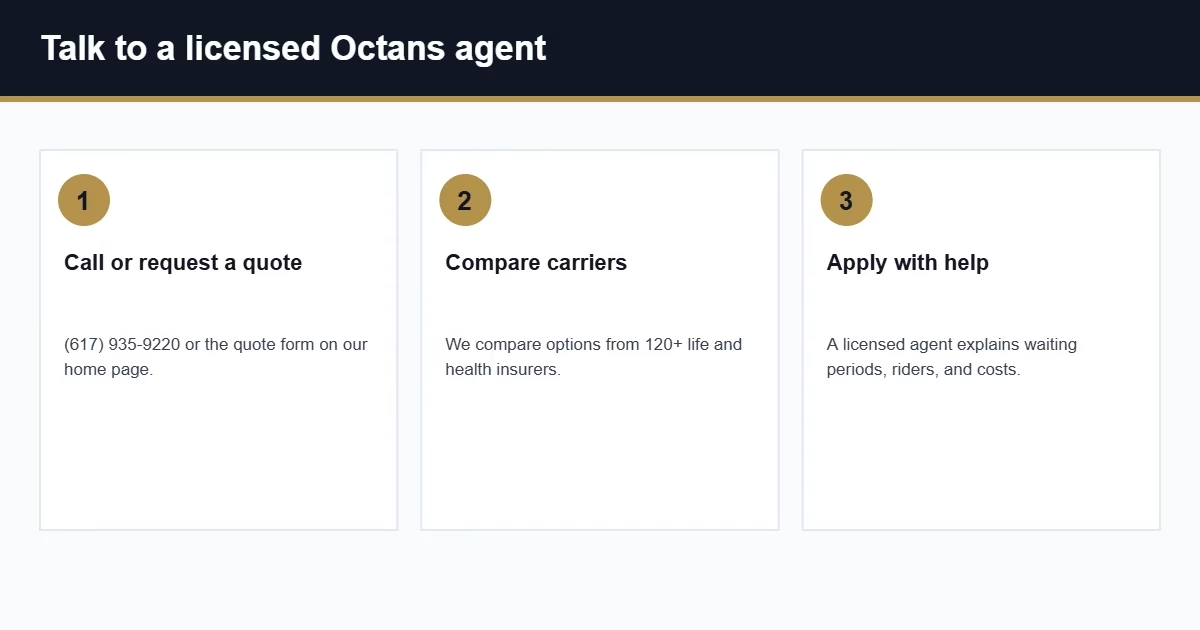
Questions about life insurance for mothers usually depend on your age, health, state, and budget. A licensed Octans agent can review your situation, compare options from more than 120 carriers, and explain the trade-offs before you decide. Call (617) 935-9220 or request a free quote.

Related guides
Sources: NAIC Life Insurance Buyer’s Guide; NAIC Life Insurance Policy Locator. This article is for general information and is not tax, legal, or medical advice.