
What Is Life Insurance and How Does It Work?
What Is Life Insurance: What This Guide Covers
This guide explains what is life insurance in plain language, reviewed by a licensed Octans agent. Use the summary below to jump to the section you need, and contact us with questions about your own situation.
- How Does Life Insurance Work?
- Who Are the Main People in a Life Insurance Policy?
- What Are the Main Types of Life Insurance?
- How Much Life Insurance Do You Need?
- How Much Does Life Insurance Cost?
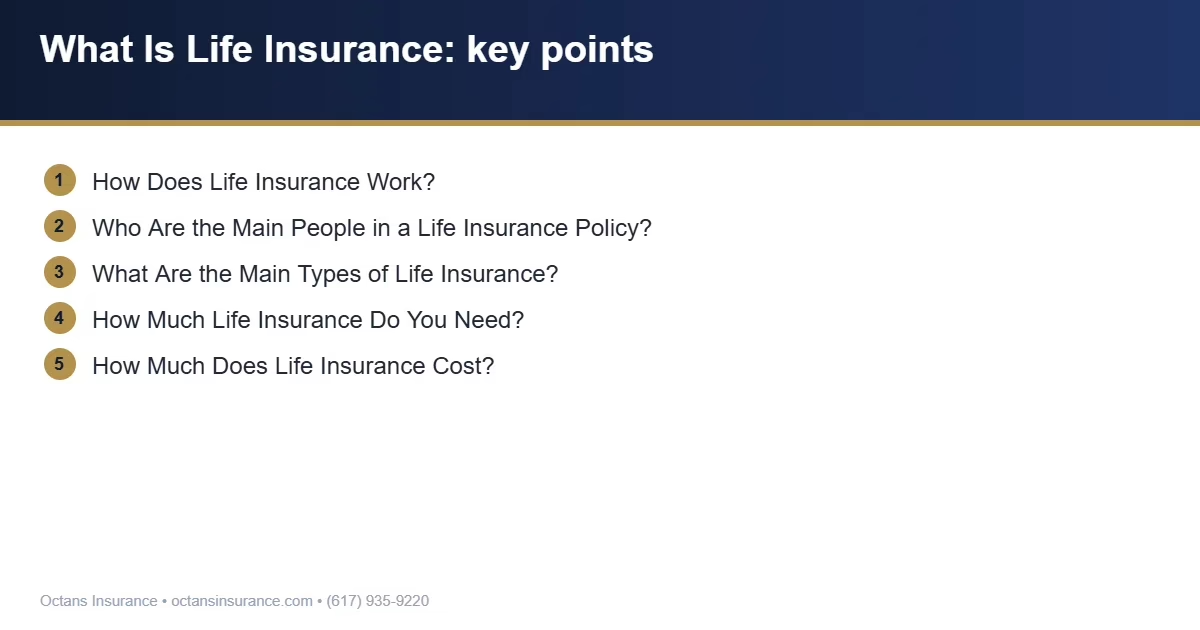
Table of Contents
Life insurance is designed to provide financial protection to the people you care about if you die while your policy is in force. In exchange for premium payments, an insurance company agrees to pay a death benefit to the beneficiary or beneficiaries named in the policy, subject to the policy’s terms and conditions.
For many families, life insurance is one part of a broader financial plan. The proceeds may help replace income, pay a mortgage, cover everyday living expenses, fund education, handle final expenses, or give loved ones additional financial flexibility during a difficult time.
How Does Life Insurance Work?
The basic concept is straightforward. You apply for coverage with an insurance company. The insurer reviews the application and, depending on the product, may consider factors such as age, health history, medications, tobacco use, occupation, driving history, and the amount of coverage requested. Some policies require more underwriting than others, while certain products may offer simplified underwriting or guaranteed acceptance.
If the application is approved and the policy is placed in force, you pay the required premium. If the insured person dies while eligible coverage is active, the beneficiary can submit a claim to the insurance company. After the claim is reviewed and approved, the insurer pays the policy’s death benefit according to the contract.
Who Are the Main People in a Life Insurance Policy?
- Insured: The person whose life is covered by the policy.
- Policy owner: The person or entity that controls the policy and generally has the right to make permitted policy changes.
- Beneficiary: The person, people, trust, or other eligible entity designated to receive the death benefit.
- Insurance company: The carrier that issues the policy and is responsible for paying covered claims.
What Are the Main Types of Life Insurance?
Term Life Insurance
Term life insurance is designed to provide coverage for a specified period, such as 10, 20, or 30 years. It is often used when someone wants a larger amount of protection during years when financial responsibilities are especially high. Examples may include raising children, paying a mortgage, replacing income, or covering other debts.
Whole Life Insurance
Whole life insurance is a form of permanent life insurance. Subject to the policy terms and required premiums being paid, it can remain in force for the insured’s lifetime. Whole life policies may also build cash value over time. Premiums, guarantees, cash values, and access to policy values vary by product and carrier.
Indexed Universal Life Insurance
Indexed universal life, commonly called IUL, is another type of permanent life insurance. It may provide flexible premiums and cash-value accumulation tied in part to the performance of a market index, subject to policy caps, floors, participation rates, charges, and other contract provisions. An IUL is not a direct investment in the stock market, and policy performance can vary.
Final Expense Life Insurance
Final expense insurance is generally a smaller whole life policy designed for people who want funds available for funeral costs, burial or cremation expenses, medical bills, debts, or other end-of-life expenses. These policies often use simplified underwriting, although eligibility depends on the carrier and product.
How Much Life Insurance Do You Need?
There is no single amount that is right for everyone. A useful starting point is to consider the financial responsibilities that would remain if you died. These might include replacing several years of income, paying off a mortgage or other debts, providing for children, funding education, covering final expenses, and leaving an emergency reserve for your family.
Your existing savings, employer-provided life insurance, investments, other insurance, and household income can also affect the amount of additional coverage you may need. A licensed insurance professional can help you compare these factors rather than relying solely on a general rule of thumb.
How Much Does Life Insurance Cost?
Life insurance premiums depend on several factors. Age is particularly important because coverage generally becomes more expensive as you get older. Health history, tobacco use, policy type, coverage amount, term length, underwriting class, and carrier can also significantly affect the price.
This is one reason comparing multiple insurance companies can be useful. One carrier may view a particular health condition or medication differently from another. As an independent insurance brokerage, Octans Insurance can help consumers compare available options from multiple insurance companies rather than being limited to a single carrier.
Does Life Insurance Require a Medical Exam?
Not always. Traditional fully underwritten policies may require a medical exam, laboratory work, or medical records. Many modern life insurance products use accelerated or simplified underwriting and may be able to make a decision using an application plus electronic data sources. Guaranteed-issue policies generally do not require health questions or a medical exam, but they can have higher costs, lower coverage limits, and graded death-benefit provisions during an initial period.
When Should You Consider Buying Life Insurance?
People commonly consider life insurance when they get married, have a child, buy a home, take on significant debt, start a business, become responsible for supporting another person, or simply want to make sure final expenses will not become a financial burden on their family. Because age and health affect eligibility and price, waiting can change the options available to you.
Choosing the Right Life Insurance Policy
The right policy depends on what you want the insurance to accomplish. Someone primarily concerned about protecting a mortgage for the next 20 years may have different needs from someone seeking permanent coverage for final expenses or legacy planning. The goal should be to match the type and amount of coverage to your needs, budget, health, and expected length of protection.
Get Help Comparing Life Insurance Options
Octans Insurance LLC is an independent insurance brokerage. We help individuals and families understand their life insurance options and compare coverage available from multiple insurance carriers. If you are considering term life, whole life, final expense, mortgage protection, indexed universal life, or another form of life insurance, our licensed agents can help you review available choices.
Ready to explore your options? Request a life insurance quote from Octans Insurance and speak with a licensed agent about coverage that fits your needs and budget.
How Does Life Insurance Work? A Simple Example
How does life insurance work in real life? Say a 35-year-old parent buys a $500,000, 20-year term policy and names their spouse as beneficiary. They pay a fixed monthly premium. If they die during those 20 years, the insurer pays the spouse $500,000, usually tax-free, to replace income and pay the mortgage. If they outlive the term, the coverage ends and no benefit is paid. That’s the trade-off that keeps term affordable.
Those are the life insurance basics: you pay premiums, the insurer promises a death benefit, and your beneficiary receives it if you die while the policy is in force. Everything else, such as cash value, riders and policy length, is a variation on that simple promise. To learn how life insurance works for your family, compare term vs. whole life.
Keep Reading: Related Guides
- Which life insurance policy to choose
- Affordable life insurance on a tight budget
- Why to buy life insurance while you are young

What Is Life Insurance: Frequently Asked Questions
What is life insurance in simple terms?
Life insurance is a contract: you pay premiums, and the insurer pays a death benefit to your beneficiaries if you die while the policy is in force. Term life insurance covers a set period; permanent life insurance, such as whole life, lasts for life and builds cash value.
How much does life insurance cost?
The cost of life insurance depends on age, health, tobacco use, coverage amount, and policy type. Published samples show a healthy 40-year-old paying roughly $35 to $59 a month for $250,000 to $500,000 of 20-year term coverage.
What Is Life Insurance: Next Steps With a Licensed Agent
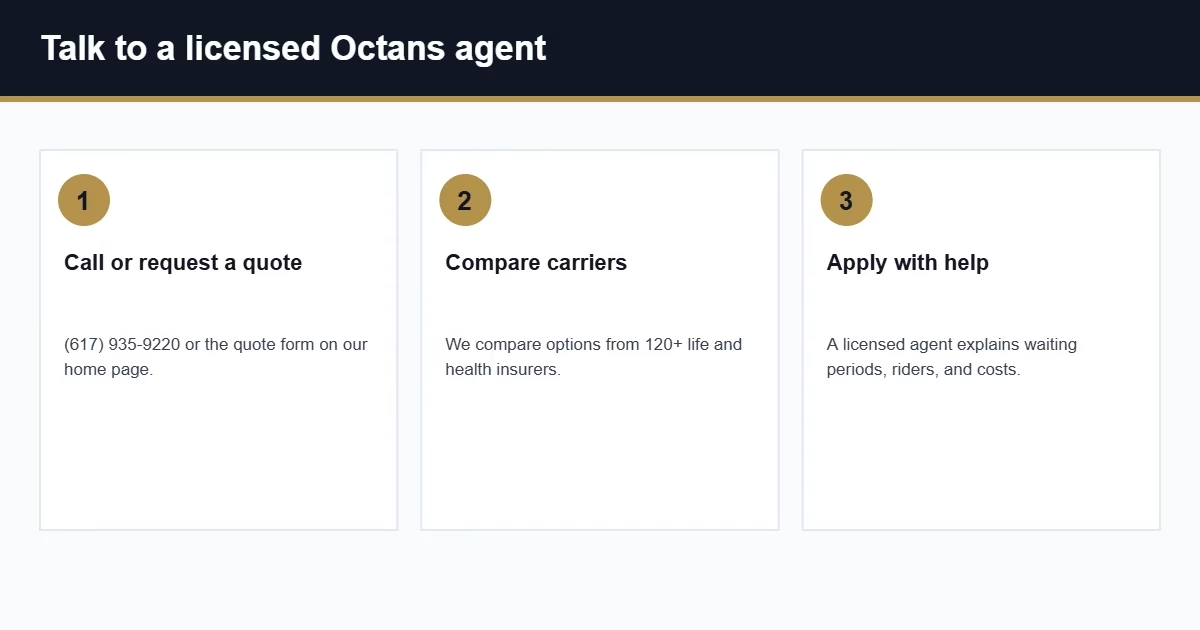
Questions about what is life insurance usually depend on your age, health, state, and budget. A licensed Octans agent can review your situation, compare options from more than 120 carriers, and explain the trade-offs before you decide. Call (617) 935-9220 or request a free quote.

Related guides
Sources: NAIC Life Insurance Buyer’s Guide; NAIC Life Insurance Policy Locator. This article is for general information and is not tax, legal, or medical advice.