
Medicare Coverage
Does Medicare Cover Respite Care for Family Caregivers?
Does Medicare cover respite care when a family caregiver needs a break? Here is how the hospice respite benefit works, what it costs in 2026, and where else families find respite.
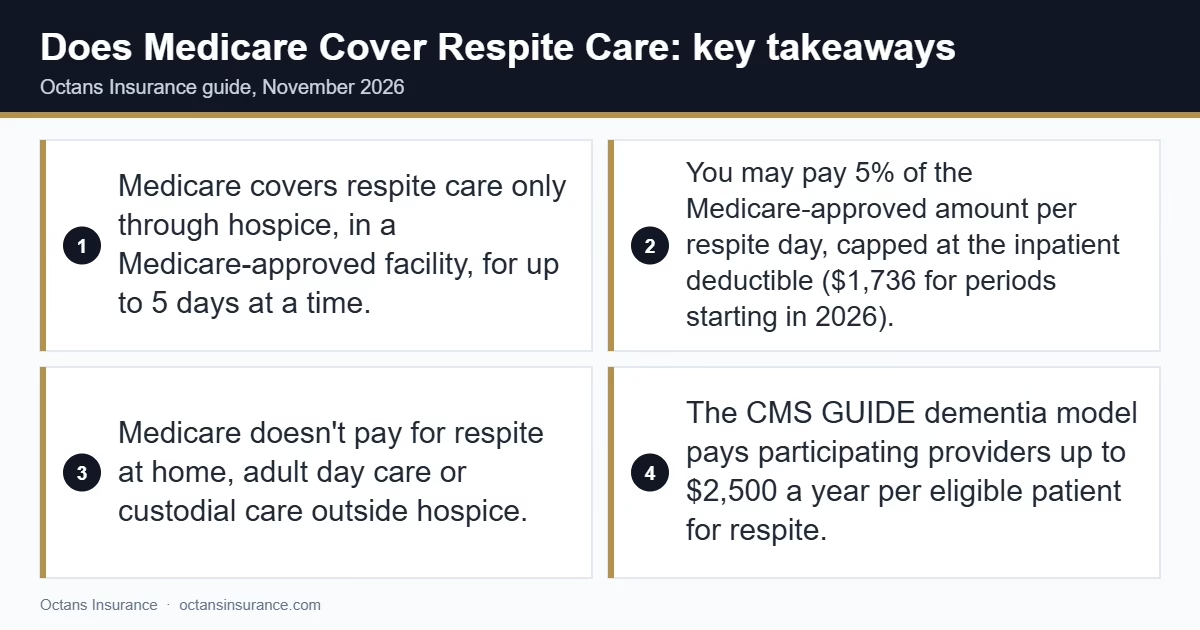
- Medicare covers respite care only through hospice, in a Medicare-approved facility, for up to 5 days at a time.
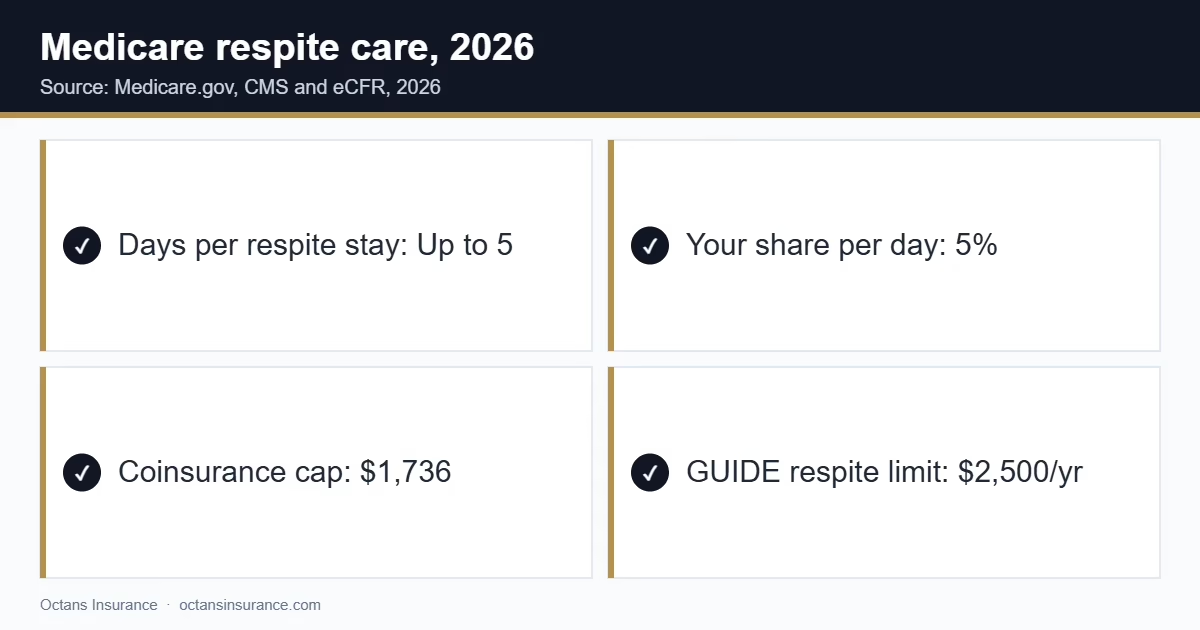
- You may pay 5% of the Medicare-approved amount per respite day, capped at the inpatient deductible ($1,736 for periods starting in 2026).
- Medicare doesn’t pay for respite at home, adult day care or custodial care outside hospice.
- The CMS GUIDE dementia model pays participating providers up to $2,500 a year per eligible patient for respite.
Table of Contents
Make sure your family is financially protected today!
Does Medicare cover respite care? Only for people in hospice. If your loved one gets Medicare’s hospice benefit, Part A covers inpatient respite care in a Medicare-approved facility for up to 5 days at a time so the usual caregiver can rest. You may pay 5% of the Medicare-approved amount. Outside hospice, Original Medicare doesn’t pay for respite care, though Medicaid, the VA and local aging programs may.
When does Medicare cover respite care?
Does Medicare cover respite care on its own? No. It’s part of the hospice benefit, not a stand-alone service. The person you care for must qualify for hospice first. The Medicare.gov hospice coverage page lists the conditions: they have Part A, their hospice doctor and regular doctor (if they have one) certify a life expectancy of 6 months or less, they accept comfort care instead of care to cure the illness, and they sign a statement choosing hospice.
Once hospice starts, here’s how Medicare Part A respite care works, according to the official Medicare Hospice Benefits booklet:
- It’s for when the usual caregiver, like a family member, needs rest.
- The stay is in a Medicare-approved facility, like a hospice inpatient facility, hospital or nursing home.
- The hospice provider arranges it.
- Each stay can last up to 5 days.
- You can use it more than once, but only on an occasional basis.
Hospice doesn’t normally pay room and board. Respite is an exception: if the hospice team decides you need respite care and arranges it, Medicare covers the facility stay. Our Medicare hospice benefit guide covers the rest of hospice, including benefit periods and what’s included.
What does Medicare Part A respite care cost in 2026?
Hospice itself has no deductible. For Medicare Part A respite care, you may pay 5% of the Medicare-approved amount per day. The Medicare booklet gives this example: if Medicare approves $100 a day, you pay $5 a day and Medicare pays $95.
There’s a ceiling. Under the federal hospice rule, 42 CFR 418.400, your total respite coinsurance during a hospice coinsurance period can’t exceed the inpatient hospital deductible for the year that period began. For periods that begin in 2026, the CMS 2026 Part A and B fact sheet puts that deductible at $1,736.
A hospice coinsurance period starts on the first day the hospice election takes effect. It ends after the first stretch of 14 days in a row without a hospice election in effect.
| Hospice cost item | What you pay with Original Medicare |
|---|---|
| Hospice care from a Medicare-approved provider | $0 |
| Outpatient drugs for pain and symptom control | Up to $5 per prescription |
| Inpatient respite care | 5% of the Medicare-approved amount per day |
| Total respite coinsurance cap (periods starting in 2026) | $1,736 |
| Room and board during an arranged respite stay | Covered |
| Room and board if you live in a nursing home | You may have to pay |
Sources: Medicare.gov hospice care page, CMS Medicare Hospice Benefits booklet (March 2026), 42 CFR 418.400 and the CMS 2026 Part A and B fact sheet, as of November 2026.
A Medigap policy covers hospice costs for drugs and respite care, according to the hospice booklet. Medicare.gov’s Medigap comparison chart shows two exceptions: Plans K and L pay 50% and 75% of hospice coinsurance. Our Medigap guide explains how those policies work. If you’re in a Medicare Advantage plan when hospice starts, Original Medicare covers everything related to the terminal illness.
Hypothetical example: Ruth is in hospice at home, and her son is her full-time caregiver. Does Medicare pay for respite care in full for her? Not quite. Using the booklet’s example of a $100 Medicare-approved daily amount, each 5-day respite stay costs Ruth 5 × $5 = $25. If she uses respite three times in a year, she pays 3 × $25 = $75. Her total respite coinsurance could never go above $1,736 in a hospice coinsurance period that began in 2026. Real approved amounts vary by facility and area.
Does Medicare pay for respite care at home?
No. Does Medicare pay for respite care at home in any form? The hospice respite benefit is inpatient care in a facility. Medicare doesn’t send a substitute caregiver to your house so you can take a break.
Hospice patients do get help at home. Their plan of care can include hospice aide and homemaker services, nursing care and social worker services. These support the patient, but they aren’t respite in Medicare’s terms.
Medicare’s home health benefit doesn’t fill the gap either. The Medicare.gov home health page says it doesn’t cover 24-hour-a-day care at home, homemaker services unrelated to your care plan, or personal care like bathing and dressing when that’s the only care you need. Our guide to Medicare and home health care explains who qualifies.
One Part B benefit helps caregivers directly. Medicare.gov says Part B covers caregiver training services when a provider decides training fits the patient’s treatment plan. You learn skills like giving medications and moving the patient safely. After the Part B deductible, the patient pays 20% of the Medicare-approved amount.
Does Medicare cover respite care outside hospice?
Generally, no. Does Medicare pay for respite care through adult day programs or paid aides? No. Respite outside hospice is usually non-medical, and Medicare.gov’s long-term care page says Medicare doesn’t pay for long-term care, also called custodial care. That page lists adult day health care and personal care among those services. Medigap doesn’t pay for them either.
That also means Medicare won’t pay for a nursing home stay just to give a caregiver a break. Medicare’s skilled nursing benefit has its own rules, which our page on whether Medicare covers nursing home care explains.
The main exception is a federal pilot for dementia care, covered next. For broader planning, see does Medicare cover long-term care.
Does Medicare cover respite care for dementia caregivers?
Sometimes. Does Medicare cover respite care for dementia outside hospice? Only through a CMS test program. The GUIDE (Guiding an Improved Dementia Experience) Model is a voluntary, nationwide model that began July 1, 2024, and runs for 8 years. It supports people with dementia and their caregivers.
Through GUIDE, CMS reimburses participating providers up to $2,500 a year per eligible patient for respite services. Those can include in-home care, adult day center programs and facility-based respite. GUIDE also offers care navigation, a 24/7 support line and caregiver training.
GUIDE works only through participating providers, and eligibility rules apply. CMS publishes a participant list. Ask your loved one’s doctor whether a GUIDE program serves your area. Our Medicare dementia care guide covers the other benefits for memory loss.
Where else can you get help paying for respite care?
Since the answer to “does Medicare pay for respite care” is usually no outside hospice, most families find respite through other programs:
- Medicaid waivers. States can offer home and community-based services waivers, and respite care is among the services they can include. The person must need the level of care an institution such as a nursing home provides, and states can cap how many people a waiver serves.
- VA respite care. The VA respite program is open to enrolled veterans who meet clinical criteria. It can pay for an aide at home, adult day health care, or a short nursing home stay. A copay may apply. See our page on Medicare for veterans.
- Older Americans Act caregiver support. The National Family Caregiver Support Program funds respite care, counseling, support groups and training through states. It serves adults caring for someone 60 or older, or for someone of any age with Alzheimer’s disease or a related disorder.
- Lifespan Respite programs. ACL has awarded grants to agencies in 39 states and the District of Columbia since 2009 to improve access to respite.
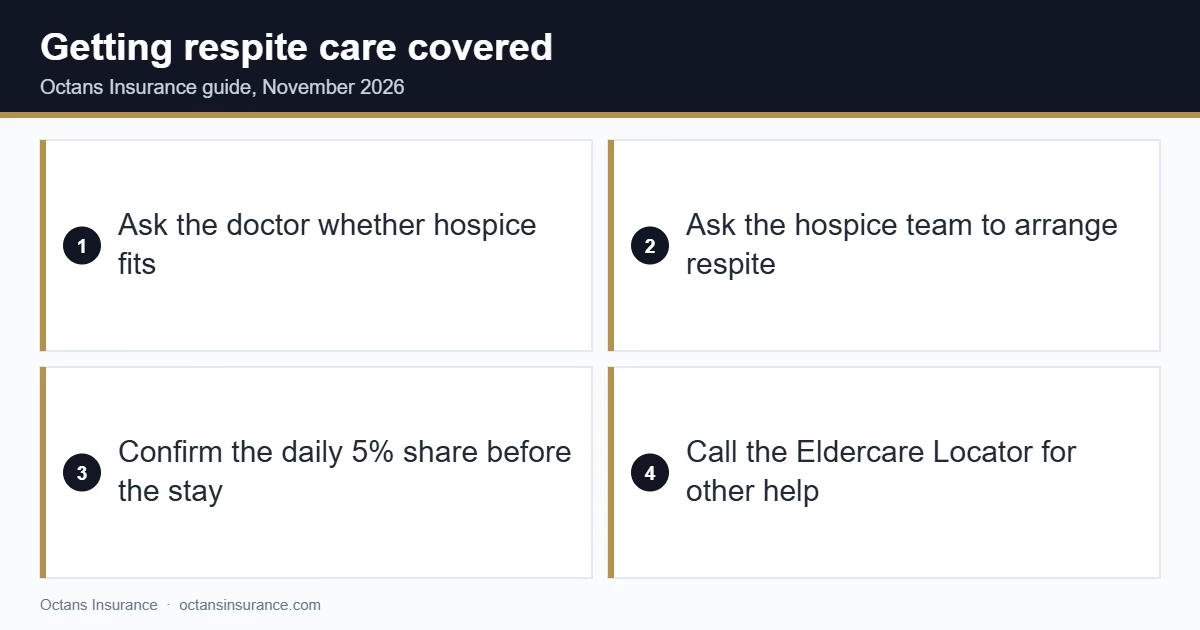
To find local programs, use the Eldercare Locator or call 1-800-677-1116. It connects you to your Area Agency on Aging.
How to get respite care covered, step by step
- Check hospice eligibility. If your loved one has a terminal illness, ask the doctor whether hospice fits. Respite under Medicare starts there.
- Ask the hospice team for a respite stay. The hospice provider arranges it in a Medicare-approved facility, up to 5 days at a time.
- Confirm your cost. Ask the hospice for the daily approved amount and your 5% share before the stay.
- Ask about GUIDE. For dementia, ask the doctor whether a GUIDE participant serves your area.
- Call your Area Agency on Aging. Ask about caregiver support, respite vouchers and Medicaid waivers.
- Check VA benefits. If your loved one is a veteran, ask the VA social worker about respite.
Questions to ask before you book respite:
- Is the facility Medicare-approved, and does our hospice have an arrangement with it?
- What will we pay per day, and does our Medigap policy pick up that share?
- How often can we use respite under this hospice’s policies?
- Will medications, equipment and the care plan transfer with the patient?
- Is there a waiting list for local waiver or caregiver respite programs?
Does Medicare cover respite care: frequently asked questions
How many days of respite care does Medicare cover?
Up to 5 days each time. Medicare’s hospice benefit lets the hospice provider arrange an inpatient respite stay in a Medicare-approved facility for up to 5 days at a time. You can use respite more than once, but only occasionally. The hospice provider arranges each stay, and Medicare covers the facility stay during that time.
Does Medicare pay for respite care if my parent isn’t in hospice?
Generally, no. Outside hospice, Original Medicare doesn’t cover respite care, adult day care or custodial care. Options include a Medicaid home and community-based services waiver, VA respite for veterans, the National Family Caregiver Support Program, and the CMS GUIDE Model for some people with dementia. The Eldercare Locator at 1-800-677-1116 can point you to local programs.
How much does Medicare Part A respite care cost?
You may pay 5% of the Medicare-approved amount for each inpatient respite day. Medicare’s own example is $5 a day when the approved amount is $100. Federal rules cap your total respite coinsurance in a hospice coinsurance period at the inpatient hospital deductible, which is $1,736 for periods that begin in 2026. A Medigap policy can cover this share.
Where does Medicare respite care take place?
In a Medicare-approved facility, such as a hospice inpatient facility, a hospital or a nursing home. The hospice provider chooses and arranges the facility. Medicare covers the facility stay during arranged respite, even though hospice normally doesn’t pay room and board. Medicare doesn’t cover respite in your own home.
Does Medicare Advantage cover respite care?
For hospice patients, respite comes through Original Medicare. Once hospice starts, Original Medicare covers everything related to the terminal illness, even if you stay in a Medicare Advantage plan. The plan can still cover extra services and care unrelated to the terminal illness. Extra benefits vary by plan and area, so check the plan’s Evidence of Coverage.
Is there a limit on how often I can use Medicare respite care?
The booklet says respite can be used more than once, but only on an occasional basis. The hospice team decides when it’s needed. Each stay can’t exceed 5 days. Your total coinsurance for respite during a hospice coinsurance period is capped at the inpatient hospital deductible for the year that period started.

How a licensed Octans agent can help
Octans Insurance is an independent agency, not a government office. Our licensed agents compare Medigap, Medicare Advantage and Part D options from more than 120 carriers in the 19 states where we work. We can show how a Medigap policy handles hospice coinsurance, including Medicare Part A respite care costs, and how a plan’s network and extra benefits fit your family. We can’t arrange respite care itself.
For unbiased help, contact your State Health Insurance Assistance Program (SHIP) through shiphelp.org, or call 1-800-MEDICARE (1-800-633-4227; TTY 1-877-486-2048). Questions about care belong with your loved one’s doctor and hospice team.
To review your Medicare coverage, call (617) 935-9220.
Keep Reading: Related Guides
- Medicare hospice benefit
- Does Medicare cover nursing home care?
- Medicare dementia care
- Does Medicare Cover Dialysis? What Parts A and B Pay in 2026
- Does Medicare Cover Kidney Transplant Surgery and Drugs?
We do not offer every plan available in your area. Please contact Medicare.gov or 1-800-MEDICARE to get information on all of your options.
This article is for general information and is not tax, legal, or medical advice.
About examples and tools: Hypothetical examples, sample rates, calculators and quizzes on this site are for general educational and illustrative purposes only. They are not quotes, offers of coverage, or guarantees of eligibility, approval, price or benefits, and they are not legal, tax, financial or medical advice. The insurance company decides eligibility and price; Medicare rules are set by CMS and the Social Security Administration. Octans Insurance is not connected with or endorsed by the U.S. government or the federal Medicare program.
Check how your Medicare plan handles hospice costs
Start with a free, no-obligation quote review with a licensed Octans agent.
(617) 935-9220 | life@octansinsurance.com